


How should sustainability be defined?

Environmental targets are tightening, and vehicle technology is increasing in complexity; therefore, Autoelectro believes the trade must rethink how sustainability is defined. Here’s Harnek Bhogal with his perspective.
At Autoelectro, we are celebrating 40 years of service in 2026. As a family-owned remanufacturer, we believe sustainability is no longer simply about “going green” but about creating a resilient aftermarket that supports increasingly advanced vehicle systems long into the future.
We believe remanufacturing remains a critical solution, as the trade faces rising complexity in rotating electrics, particularly as the market transitions towards 48V systems with mild-hybrid and plug-in hybrid technology.
People often think sustainability is just an environmental conversation – but for us, it’s broader than that. It’s about longevity, quality, trust, and ensuring there is always an answer for the customer.
Four decades of upholding environmental standards
Our commitment to sustainability is clear; we have held ISO 9001 certification since 1995 – an internationally recognised quality management standard focused on consistency, traceability, process control, and continual improvement across manufacturing operations.
ISO 9001 underpins everything from testing procedures and production standards through to stock management and customer support.
Alongside this, we maintain ISO 14001 environmental management accreditation, a globally recognised framework designed to help businesses reduce environmental impact, improve resource efficiency, and manage waste responsibly.
Within a remanufacturing environment, ISO 14001 covers material reuse, recycling processes, waste reduction, energy management, and environmental monitoring throughout the production cycle.
These standards are difficult to achieve and maintain; the environmental criteria are exceptionally demanding, and they necessitate a competent Environmental Management System (EMS) for continuous improvement across all operations.
This means identifying and registering all activities that affect the environment, setting measurable objectives to minimise impacts, ensuring compliance with regulations, and committing to regular audits and reviews. Remanufacturing aligns closely with these criteria because our circular and sustainable business model inherently supports them.
Our remanufacturing model supports many of the objectives underpinning these standards, including material reuse, waste reduction, and resource efficiency, while our management systems ensure these activities are monitored, measured, and continually improved.
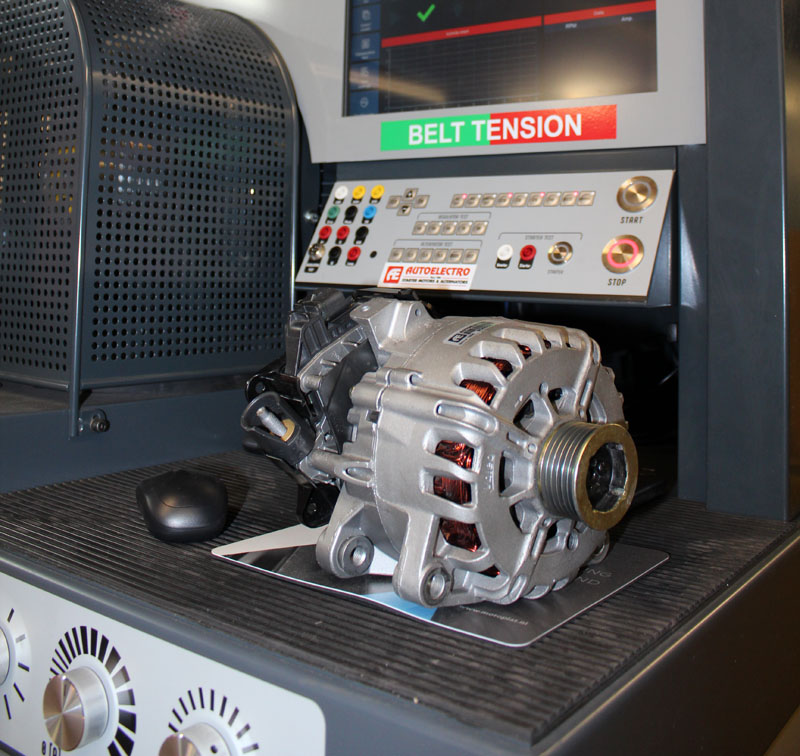
Sustainability through availability
While environmental responsibility is increasingly important for larger businesses facing ESG targets and legislation, for us, the biggest commercial value of remanufacturing lies in supply resilience.
Remanufacturing protects the trade from potential supply chain disruptions that could affect imported products.
We’re less vulnerable to external shocks because we remanufacture in Britain and maintain our own component stock. If a shipment is delayed overseas, businesses relying purely on imported products could struggle. We’re different because we can still manufacture, remanufacture, or even rebuild a customer’s own unit if necessary.
As more complex applications appear, this flexibility is becoming even more crucial; some modern 48V MHEV applications can be challenging to manufacture economically overseas due to volume requirements and technical complexity. That’s where remanufacturing can help bridge the gap by supporting the availability of specialist and lower-volume applications.
If we say no, we risk losing the customer
We know that price can be a sensitive subject, but we believe it is important to consider remanufacturing not just from a cost perspective. We’re confident the real value lies in protecting sales opportunities and customer loyalty.
If a factor says no because its supplier doesn’t have the product, the customer doesn’t disappear – they simply go elsewhere. And once another factor solves that problem, they suddenly have the opportunity to win all the customer’s future business as well.
We are committed to finding a solution wherever possible. That’s the sustainable part of remanufacturing, not just environmentally, but commercially.
Tough market conditions
We also acknowledge that the UK remanufacturing sector has faced considerable consolidation in recent years, with a number of established operators reducing their activities or withdrawing from certain areas of the market.
We think this trend reflects the growing complexity and cost of modern vehicle systems rather than declining demand. Everything on vehicles is becoming more expensive – hybrid systems, batteries, electronics, software. Rotating electrics are just one part of that wider technological shift.
However, remanufacturing will remain essential as vehicle parc complexity increases because the aftermarket still needs remanufacturers to support difficult and specialist applications. Without a strong remanufacturing sector, customers may face fewer sourcing options and higher costs for certain applications.