


The importance of stocking the right components
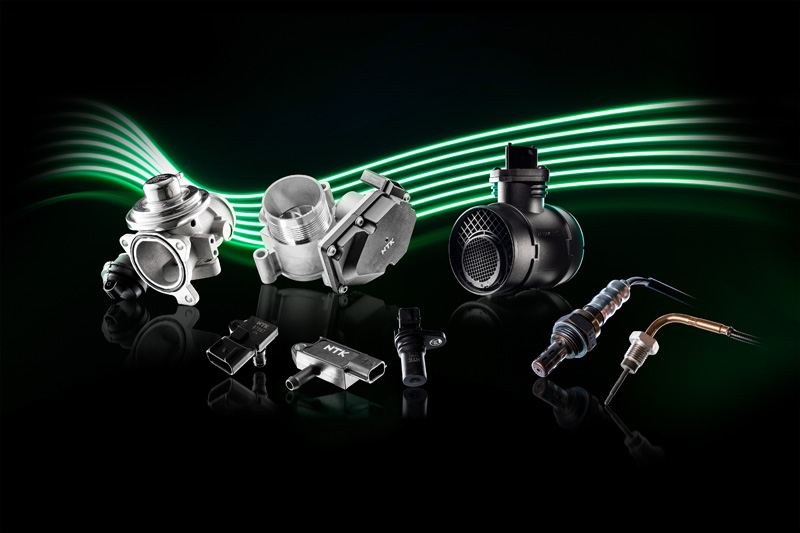
Every combustion in today’s engines requires a constant stream of data flowing to the engine control unit (ECU), often measured and corrected in milliseconds. Niterra UK believes this “increasing complexity” highlights the importance of stocking the right components to support workshops with accurate diagnosis and efficient repair.
According to Niterra, the heart of modern engine management comprises four critical aspects of performance: pressure, position, emissions and temperature. When one falls, the impact is immediate – hurting drivability, emissions and overall vehicle performance.
Niterra UK reports its NTK Vehicle Electronics brand offers a portfolio of sensors and valves engineered to deliver OE-quality accuracy and fast response across all four – in-demand parts that help workshops fix vehicles first time.
Pressure and position: The foundation of control
The pressure sensors, including manifold absolute pressure (MAP) and exhaust pressure sensors, provide the ECU with essential data on airflow and exhaust system performance. This information is critical for calculating fuelling and boost control.
When pressure signals are incorrect, symptoms such as hesitation, flat spots and increased emissions quickly follow, making these components a frequent replacement opportunity.
Alongside this, the ECU must monitor the positions of key engine components. Solutions – available from NTK – include throttle bodies, which deliver accurate open and closed position data, and engine speed and position sensors (cam and crank), which ensure precise engine timing.
These signals must work together. Without accurate cam and crank data, the ECU cannot correctly interpret load signals, regardless of how accurate the pressure readings appear.
Niterra is confident that stocking both pressure and position components will help workshops complete efficient repairs and avoid delays.
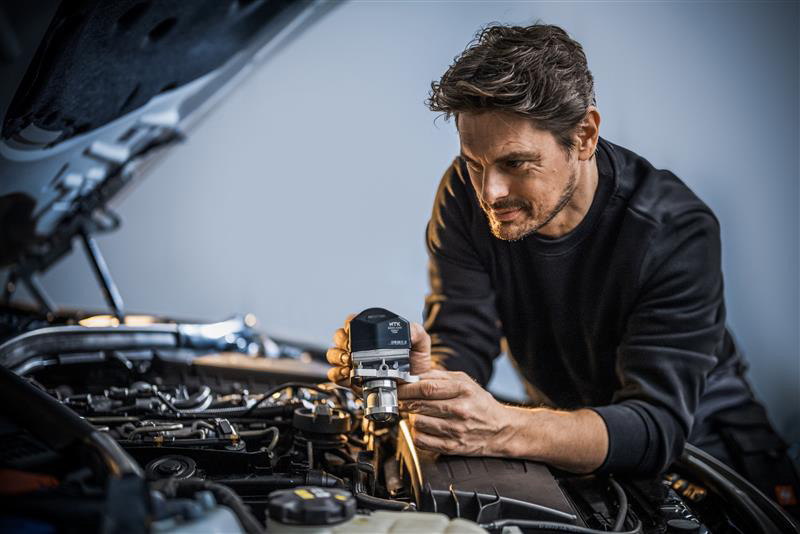
Temperature and emissions: Fine-tuning combustion
Temperature sensors play an important role in protecting engine components and supporting emissions control. By monitoring combustion heat, they allow the ECU to adjust fuelling strategies under load. If temperature readings are inaccurate, the ECU may reduce power unnecessarily or fail to manage emissions effectively.
Emission control components, including EGR valves and oxygen sensors, complete the feedback loop. Oxygen sensors measure exhaust oxygen levels to fine-tune fuelling in real time, while EGR valves help reduce nitrogen oxide emissions by recirculating exhaust gases through the engine.
With emissions systems becoming increasingly complex, Niterra believes these components represent a growing area of demand.
Four pillars, one opportunity
The ECU does not treat sensor data in isolation. Each input is analysed alongside the others, meaning a delay or inaccuracy in one signal can affect overall engine performance.
A drifting temperature reading, delayed pressure signal or incorrect timing input can all lead to warning lights, poor drivability and repeat workshop visits.
Niterra believes this presents a “clear opportunity” to support customers with a complete, OE-quality range that enables accurate diagnosis and long-lasting repairs. By supplying a coordinated range across all four pillars, workshops can be supported in a bid to improve first-time fix rates, reduce comebacks and build long-term customer confidence.