Why additive quality matters
The Independent Garage Association’s endorsement of the ‘Fake Always Breaks’ campaign highlights the risks associated with counterfeit vehicle parts and the importance of vigilance across the motor trade. A similar principle applies to vehicle additives, according to Kalimex, that using products with unclear formulations or low active ingredient levels can reduce effectiveness and may impact vehicle performance if not used correctly.
For Mike Schlup, managing director of Kalimex – the K-Seal Coolant Leak Repair pioneers and exclusive UK distributor of the JLM Lubricants range – the comparison is clear.
He said: “We’ve long emphasised that some DPF additives may not deliver optimal results if not used as intended. For example, iron-based additives designed for DPF cleaning can generate higher temperatures, which, if not managed correctly, could affect the DPF. The market offers a wide range of products, and understanding their correct use is key.
“The JLM range of DPF cleaning products uses cerium and platinum, which operate at lower temperatures to help burn trapped soot. This approach is designed to protect the DPF core, extend DPF life and reduce ash accumulation.
“Based on discussions with DPF specialists, such as AJ Fleetcare, technicians occasionally encounter vehicles in ‘limp mode,’ where additive use may be a contributing factor. To help, the team now provides comprehensive DPF training, enabling technicians to clean DPFs effectively while on the vehicle.”
K-Seal: Tested and trusted
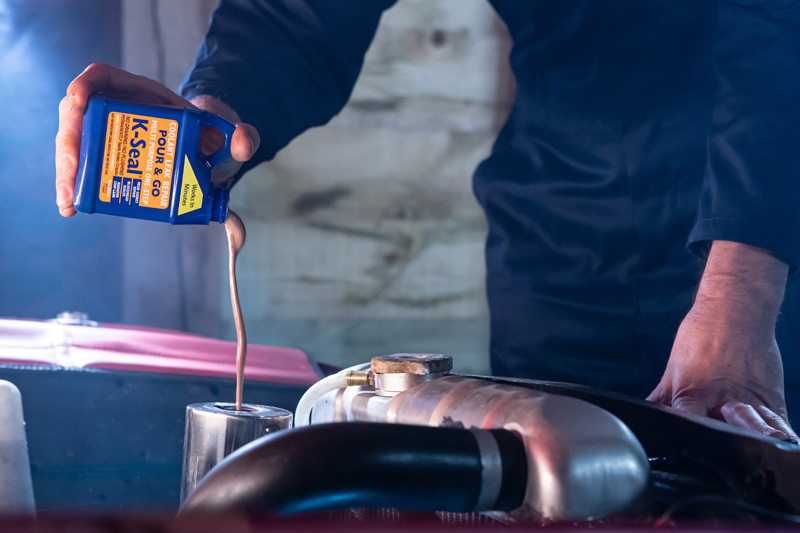
K-Seal Permanent Coolant Leak Repair has been a global bestseller for 15 years and maintains strong positions in key markets, including the US. Mike Schlup invested in product testing after recognising the need for rigorous, independent evaluation.
He said: “We worked with Brighton University Engineering Division, known for its collaborations with leading automotive brands. We identified an internationally recognised benchmark – the ASTM D-3147 Standard Test Method for Testing Stop-Leak Additives for Engine Coolants – to assess K-Seal alongside other products.
“This standard defines the procedures and equipment for evaluating the effectiveness and safety of coolant stop-leak products. Under these conditions, K-Seal successfully sealed 0.025in (0.635mm) diameter holes and 0.010in (0.254mm) wide by 0.5in (12.7mm) long slots.
“Further testing indicated that K-Seal performed reliably under these conditions and is compatible with a wide range of water-cooled engines. The testing supports its performance and safety, and the formula has remained unchanged since its launch in May 2003.”
JLM Lubricants: Developed with technicians in mind
With workshops increasingly prioritising ‘products over parts’, reports Kalimex, JLM Lubricants additives are now available in 39 countries, with the UK among the strongest markets.
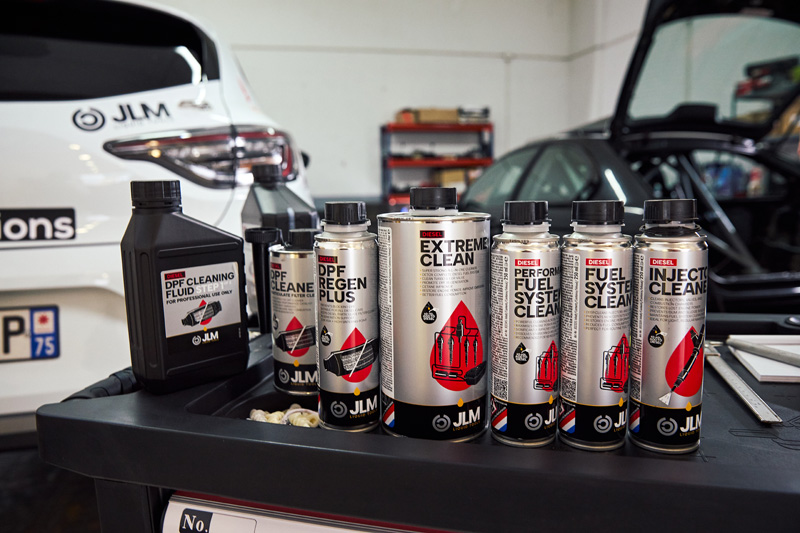
“Our team develops products in the laboratory using carefully measured concentrations of active ingredients and maintains a clear audit trail,” said Mike. “Independent technicians are central to our process, so before launching a product, we engage a group of technicians to trial it under real-world conditions.
“Does it meet intended performance goals? Are results consistent? What value will it add in the workshop? We also consult distributors, such as Kalimex, to gauge market interest. Once testing and feedback are complete, the new or improved formula is launched globally.”