

How to meet modern engine oil demands
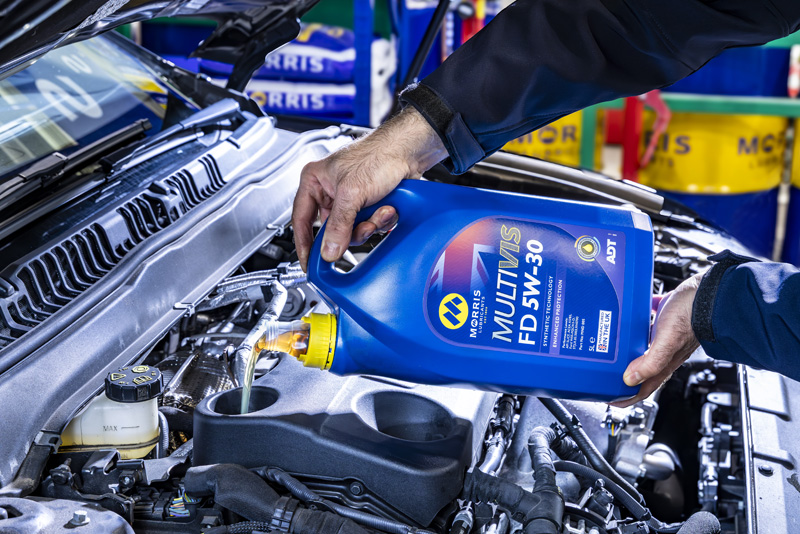
Navigating OEM approvals, low-SAPS formulations and tightening viscosity requirements to avoid mis-supply are important when manufacturing engine oils. Morris Lubricants Technology Manager, Adrian Hill, explains how the British-based company solves these problems.
Engine oils continue to evolve as OEMs innovate and bring to market new engine platforms to accommodate the need to reduce emissions. New engine oils are developed by the industry technology providers in conjunction with the OEMs through a lengthy programme of liaison and testing, to ensure compliance and that engine oils perform as they should. The outcome is a validated engine oil formulation, using high-quality tailored additive chemistry and approved base oils, which have passed bench testing, rig testing and arduous field trials.
Morris Lubricants has the responsibility to commercialise these oil formulations; this is done by manufacturing engine oils, using the correct base oils and additives to the precise chemical blend as set in the formulations. The resultant engine oil is then supplied to the aftermarket.
Continued communication with technology providers keeps our engine oils relevant to the emerging OEM requirements. Essential documentation is available, if requested by the customer, supporting any industry claims or specifications made on the finished engine oil.
To keep up to date, we are active members of industry bodies, committees and steering groups. This enables us to stay informed when legislation changes or codes of conduct are updated. These factors can also result in different or additional engine oils being produced to meet these changing requirements. Involvement like this has increased in importance over recent years, as topics, such as sustainability, have become high up on the agenda and are becoming the driving force in modern businesses.
Our senior leadership members and cross-functional teams refine business practices and implement operational improvements across all areas of the company.
Strict manufacturing process
Continuing to produce high-quality engine oils is, therefore, paramount. The manufacturing process is strictly controlled to ensure the integrity of every litre of engine oil that leaves our production facility. Continued investment in infrastructure yields operational efficiencies, consistency and process accuracy. This is also backed by thorough product quality testing. Samples are taken and quality tested from the raw materials that arrive on site, through to engine oils blended in the factory and finally the filled products ready to be sent out to our motor factor customers.
The new generation of engine oil formulations entering the market are tailored to meet specific demands with tighter and tighter limits, whether that’s innovative chemistry or more advanced physical properties. This is resulting in a new generation of OEM specific engine oils that, in many cases, are not compatible with older engines; for example, the newer thinner oil grades with ultra-thin oil films, such as 0W-20s, 0W-16s and even 0W-8s, are becoming commonplace. This provides rapid circulation for hybrid engines, improved fuel economy and reduced emissions.
A note of caution needs to be made here, though, as these thinner oil grades with ultra-thin oil films may accelerate wear if used in older engine designs.

Technical deep dive
OEM and international specifications set limits that control the amount of sulphated ash formed – when oil is burned in the combustion chamber – and chemically restrict the levels of sulphur and phosphorous. This is generally referred to as low SAPS (sulphated ash, sulphur and phosphorous). This is important as it ensures, where fitted, particulate filters don’t become prematurely blocked with ash and catalysts (three-way catalysts and AdBlue catalysts) do not become poisoned by sulphur and phosphorous reducing their service life. The engine oil is precisely formulated to comply with these low SAPS limits.
On top of these performance requirements, it is also essential that engine oil performs to keep engine components clean and deposit free, limit wear, control corrosion and stop the effects of soot. The service life and efficiency of an engine can be badly affected by poor oil choice, resulting in reduced reliability, increased workshop time and more expense.
Support is available
Correct engine oil choice can be a minefield, so we support our motor factor customers with technical advice – available in a variety of forms. We have a team of technical service advisors that can be contacted by phone, e-mail or through social media. This team can also make site visits, to provide technical advice.
Whatoil, our own online oil, lubricant and functional fluid lookup tool that shows the correct engine oil using a vehicle registration number, can be found on our website – www.rdr.link – and is available 24/7. Training seminars and training videos are also available that explain a wide variety of different features and benefits of oils and lubricants, to help to make informed decisions on oil and lubricant choice.
In summary
In the latest engine designs, engine oils are a critical component, and correct selection will keep a vehicle out of a workshop and on the road. Choosing and using the correct oil and lubricant is key, so follow the recommendations set by the OEM and check them against what is printed on the engine oil packaging.