

Carwood on sustainable remanufacturing
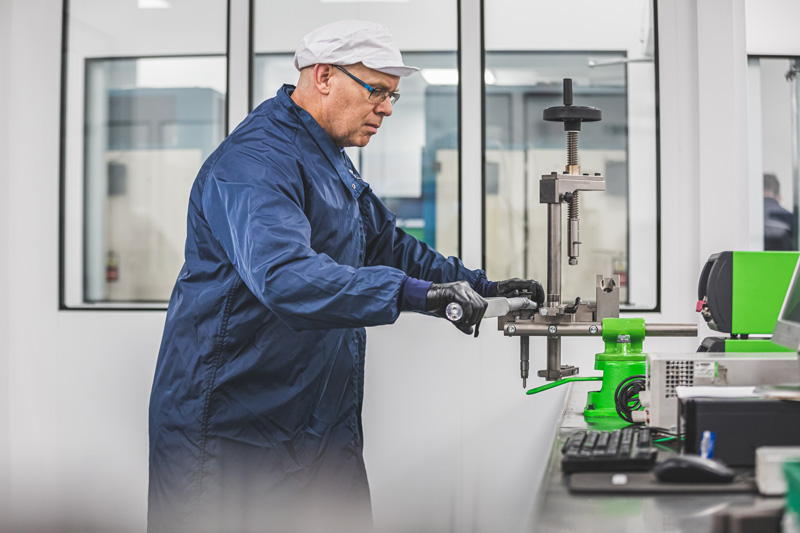
Carwood believes businesses face mounting pressure from rising costs, tightening legislation and increasing demand for sustainable solutions; therefore, circular economy practices will continue to gain momentum. Carwood says it is at the centre of this shift, stating its remanufacturing model demonstrates how closed loop principles can unlock significant energy and material savings, whilst also delivering commercial benefits for their customers. Here is Carwood Deputy Managing Director, Simon Quantrell.
The circular economy is about keeping components and materials in use for as long as possible. Rather than a linear ‘take-make-dispose’ approach, where raw material is extracted, a new component made, then thrown away at the end of its life, remanufacturing closes the loop on material flow. By recovering used components and restoring them back to their original spec, it retains not only the material, but the energy, labour and engineering that was embedded in the original part too. From a circular economy perspective, this is designed to improve resource efficiency compared with producing equivalent new components.
Energy savings are “compelling”
Take complex components, such as fuel pumps, injectors and turbochargers. By reusing the core and any non-wearable parts that perform to OE-spec, we can help reduce the reliance on finite materials and resources. Indeed, remanufacturing uses up to 70% less raw materials than new – when you think about how many components are fitted annually, these savings soon add up.
The energy savings are equally compelling. Producing a new component from scratch is an energy-intensive process; from raw material mining all the way through to manufacturing. Yet, because much of the material already exists in its final form, remanufacturing avoids many of these steps, resulting in a significant reduction in energy consumption – by as much as 80% compared to a brand new part.
Of course, lower energy usage translates directly to lower carbon emissions. Meaning remanufacturing offers a practical and immediate way for aftermarket companies, factors included, to meet their own decarbonisation goals. It’s also an opportunity to offer customers a sustainable choice. In a crowded marketplace, and with the environment increasingly high on consumers’ agendas, this is another differentiator.
Finally, by keeping existing materials and resources in the production cycle for longer, there is significantly less waste to dispose of, meaning less material ends up in landfill – the loop is effectively closed.
Supporting costs too
However, these savings aren’t just limited to the environment – they deliver on cost too. Since remanufacturing uses less raw material and energy, at Carwood we can provide a genuine alternative to new OE, at, on average, 25% less.
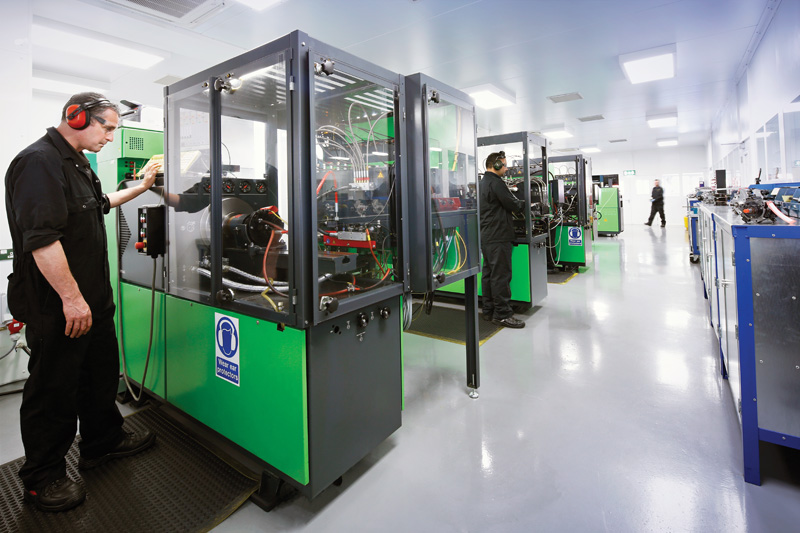
It’s important to note that this is not at the expense of quality. As an approved remanufacturer for leading OEMs, every one of our reman parts is disassembled, cleaned, inspected, rebuilt using OE or OE-approved components and 100% end-of-line tested and calibrated, to ensure it meets or exceeds the OE spec.
This process has been likened to the production of the original part – the only real difference being that we use an old part, rather than producing a brand new one. This combination – high quality at a lower cost – allows you to offer a choice of competitively-priced solutions, without compromising on performance or reliability.
Supply chain continuity another driver
Recent years have seen continued disruption to global networks – whether it’s raw material shortages or logistical bottlenecks caused by pandemics, geopolitical instability etc. By both sourcing core and remanufacturing locally, we are able to mitigate many of these challenges.
Linked to availability, OEMs are phasing out parts faster than ever before. Driven by technology and regulatory change, electronic components that were once on a 10-year lifecycle may now only be supported for a handful of years. As the gap between OEM production and the vehicle being scrapped gets bigger, remanufacturing can, in certain cases, be the most practical solution to ensure parts availability through the vehicle’s lifetime.
Ultimately, remanufacturing is fast becoming one of the most effective and commercially viable pathways to a circular economy. By embracing sustainable solutions from an OE-approved supplier, you can play your part and turn circularity, once considered a niche strategy, into an equally important and profitable part of business. In doing so, branches can save money, reduce waste and cut emissions, whilst building a more resilient and future-ready business.