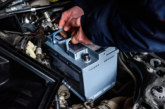

How to manage battery stock efficiently

Although the name over the door now is different, Veloris – formerly known as Ecobat Battery – is confident that its level of customer service remains. To back this up, Andy Waite, product, e-commerce and marketing strategy manager at Veloris, highlights some of the key pointers that may help you manage battery stock efficiently – allowing you to make the most of market opportunities and protect your investment.
At Veloris, we provide market intelligence to ensure stocked batteries are aligned with the likely requirements of customers, as the vehicle parc develops and demands change.
Having previously highlighted the fact that every EV also has a low voltage battery to power a multitude of its electrical systems, EVs must be considered when looking at stock profiling, particularly because 12V battery failure is one of the primary reasons that they break down.
What might also come as another surprise is that not every contemporary hybrid and EV is fitted with the latest 12V battery technology. Although it would be natural to assume that these batteries would be at a minimum AGM (absorbent glass mat), if not lithium, the truth is that there is no ‘standard’ battery for these applications, with VMs using various solutions.
The best example of this paradox is looking at models, such as the 2021 Hyundai Ioniq 5, the 2023 KIA e-Niro, the Audi Q4 e-tron and the Jaguar I-Pace, all of which use a traditional lead acid battery, whereas a Cupra Born uses an EFB (enhanced flooded battery) and a Ford Mustang Mach-E has an AGM.
Even the popular pre-2022 Tesla range incorporates a 12V battery to power the vehicle’s essential low voltage systems, such as the lights, heating and touchscreen display, as well as the door locks and alarm. Somewhat surprisingly, the Model 3 and Model X both rely on a traditional lead acid battery (a B24 and B19 type respectively), whereas the Model S uses a U1 type AGM. Irrespective of the model, however, we include the OE fitment batteries in our range.
It is important to state that from 2022, all Tesla vehicles transferred from a 12V battery to a 16V lithium battery.

Genuine opportunity
Although the service life of a 12V battery in an EV is not predetermined, it still has a finite lifespan and over time will degrade and fail, but evidence from the market suggests that the typical service life is between three and four years. So, EVs represent a genuine opportunity for the independent aftermarket.
In terms of types of vehicles visiting the typical workshop, it’s the number of hybrids that is increasing – and these too all require a 12V battery; however, as is often the way, there can be a level of confusion as to what role the batteries they utilise actually play – does the battery that powers the electric motor also start the combustion engine, or is that the responsibility of the 12V battery?
Looking at three popular hybrids: the Toyota Auris, Prius and the Lexus CT200, the 12-V battery is only used for the low voltage systems – lighting, windows, central locking, alarm etc – and is either an 054 or 055 AGM auxiliary battery, and as these vehicles age, the batteries are reaching their end of life, so demand for replacements is increasing.
In addition, usually in larger start-stop equipped applications, there is a growing number of vehicles now equipped with two 12V batteries – with an auxiliary battery used to complement the main battery.
Although they were initially thought to be fitted to provide back-up power to support the main battery or to support separate systems within the vehicle, our research has revealed that they often fulfil a more collaborative role in the vehicle’s power storage system.
Having a close eye on the battery market also allows us to provide you with information concerning other market developments; for example, our sales data confirms the split between traditional SLI (starter, ignition and lights) and AGM/EFB batteries, which was 64%/36% at the end of 2024, was likely to be 50%/50% by the end of 2025. This means that keeping a close eye on the profile of stock held is increasingly important.
This information is valuable because despite the fact that AGM/EFB batteries generally last 30 to 50% longer than an SLI battery, any reduction in quantity of battery replacements is likely to be mitigated by their higher average price, so revenue should remain unchanged. This means that aligned with the EV 12V replacement opportunities mentioned earlier, the battery landscape continues to present a profitable outlook.
Maintaining stock
While having the correct stock profile is vital to being able to satisfy customer demand, ensuring that each and every battery is well maintained – and in good condition when it’s supplied – is just as important.
If you supply a seriously discharged battery to a workshop, you risk them installing a unit that may leave the owner unable to start their vehicle – or worse, stranded at the roadside – damaging the reputation of both parties. In addition, the battery is likely to be returned as a warranty claim.
Although the claim would be investigated, if the issue was simply due to a neglected battery, and it was restored to good condition after a charge, the claim would almost certainly be rejected.
Furthermore, supplying a battery that is not fully charged can negatively affect checks carried out on other parts of the vehicle’s electrical system, potentially producing false readings or masking other faults.
The proactive approach, therefore, is to ensure that every battery supplied is fully charged when it leaves the premises. This is best carried out by employing a rolling charging regime for all the batteries in stock.
With a rotational charging regime in place, the possibility of supplying a partially discharged battery is significantly reduced, which, therefore, makes a big difference when it comes to not only any subsequent potential warranty claims, but also the relationships that you have with workshops.
Although this is not a complicated procedure, it does require a good quality charger and a designated member of staff with the responsibility to rotate the charger between the batteries, ideally a couple of times a day.
This advice comes from a 70-plus year heritage; Veloris remains at the forefront, as it continues to help the trade navigate the issues and benefit from the opportunities that 12V batteries still provide.