

What are todays OEM challenges and trends

Although Dayco is a global OEM supplier, it believes misconceptions can still arise in a crowded marketplace. Dayco National Sales Manager, Ann-Marie Dean, offers clarity.
Despite our position as an OE supply partner to almost every VM, providing power transmission products for both primary (valve timing) and auxiliary drive systems, some of our customers are still unaware of this tier one supplier status or of our 120-year heritage. As a result, we sometimes have to field some questions, such as whether our kits are OE or OE equivalent.
So, to answer this, I can confirm that all Dayco-manufactured belts are produced to the same specification, on the same production lines, using the same materials and test procedures, whether they are supplied to VMs for original fitment, into replacement parts programmes, or to the aftermarket and sold to independent workshops in the UK and across Europe.
Comprehensive kits
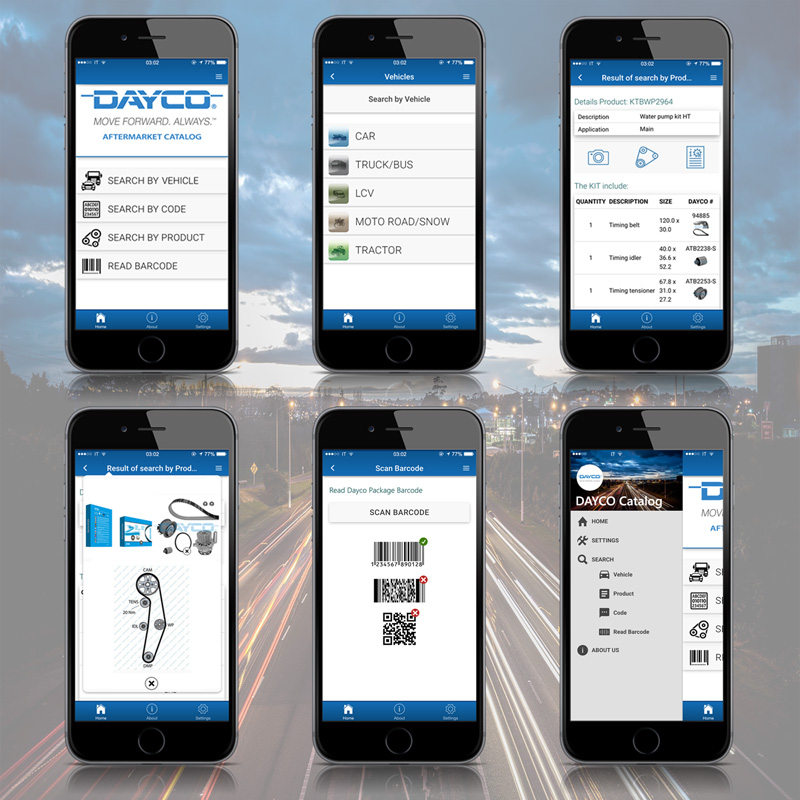
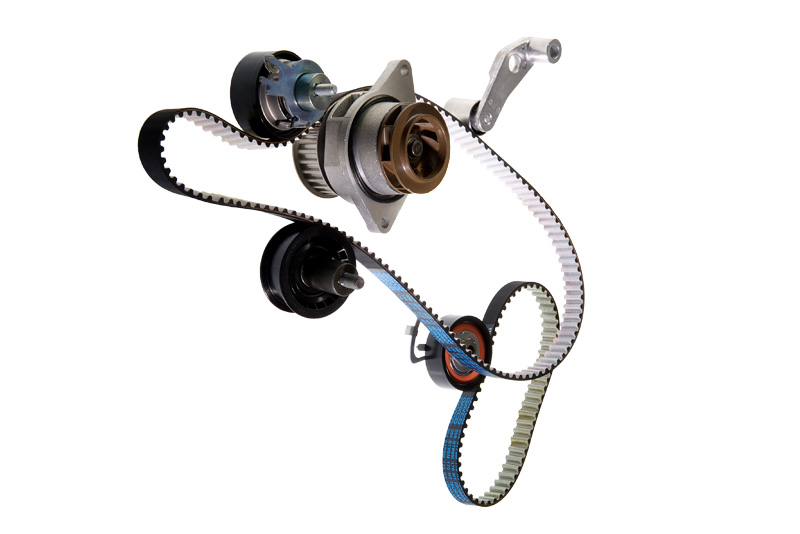
Wherever possible, each timing belt kit is designed to provide everything required for a full and reliable installation. Depending on the application, this typically includes the timing belt, tensioner, idler pulleys and, where required, the water pump. So, we endeavour to ensure each kit is assembled to match the exact OE configuration for that vehicle.
Tackling the subject of service intervals, an issue often sensationalised whenever a belt in oil (BIO) or ‘wet belt’ failure is reported, it’s worth restating that inspection and replacement intervals are determined by the VMs rather than their suppliers. Collectively we manufacture the components to the standards and specifications they have set.
Therefore, Dayco always advises following the VM specified service schedule for timing belts, auxiliary belts, tensioners and idlers; however, should you or a workshop customer need guidance for a specific vehicle, we can provide the manufacturer’s recommended interval, or direction to the correct technical reference.
We can also supply technical data, fitting instructions and torque settings to assist workshops to provide them with comprehensive technical information to support the correct installation of primary and auxiliary drive systems, as well as those incorporating a water pump. Information is available through our online catalogues, technical bulletins and training resources, but can also be supplied on request.
Counter staff, take note
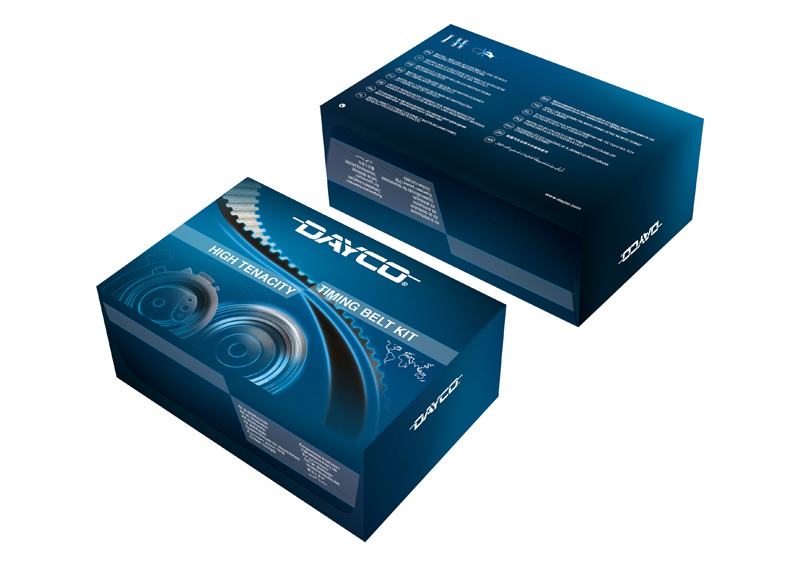
As the counter staff are the primary link to the workshop, we are keen to equip them with a wide range of practical information to help them support workshops more effectively. This includes detailed technical guidance previously mentioned, as well as technical bulletins that highlight common installation issues and best practice procedures.
Counter staff can also access comprehensive product information, including full part number details, short code references, kit contents and OE cross references. They can quickly identify the correct components. Training resources, catalogues and support from our technical team further strengthen our ability to answer workshop queries confidently. Alongside this, information on stock availability, lead times and promotional or commercial support enables counter staff to provide a complete and professional service.
Warranty support
One of our primary functions is to help technicians fit replacement components correctly and avoid unproductive, inconvenient and costly warranty claims. Sadly, however, claims do occur, and dealing with the matter clearly and professionally is key. In the event of a warranty claim, our technical department will provide step-by-step instructions and advise the factor and workshop in question of the best repair practice for the vehicle and diagnose the reason for the system’s failure.
We provide an online warranty claim form, alongside a physical version for those that prefer a paper trail, and most warranty claims are answered within two to three weeks of their receipt. In many cases we will visit the factor or workshop, then offer an onsite diagnosis to determine the reason for the failure of the system.
What does the future hold?
Addressing the much-discussed issues concerning evolving vehicle technology and the ongoing speculation around the plans to ban the sale of petrol and diesel cars – and their impact on the aftermarket – the reality is that ICE, hybrids and mild‑hybrids will remain in the vehicle parc for many years. So, alongside many other ICE-related components, demand for belts, tensioners and thermal management components will stay strong.
As a result, we are continuing to invest in advanced ICE and hybrid drive systems, such as high-load auxiliary drives and 48V belt starter generator (BSG) technology, while also expanding into thermal management and e‑powertrain solutions. The strategy is built for a long transition period where all powertrain types coexist.
Furthermore, modern engines and turbo systems are becoming increasingly compact, thermally efficient and highly stressed, and these trends will shape what you need to be prepared for in 2026.
Higher boost pressures, tighter tolerances and advanced turbo architectures mean belt systems must manage greater loads, higher temperatures and more precise tension control. The continued rollout of 48V mild‑hybrid systems and BSG technology also increases demand on auxiliary belts, overrunning pulleys and tensioners.
As engines rely more on integrated thermal management and variable flow systems, correct component selection and OE-quality parts become critical to avoiding premature failures. Staying ahead of these developments means understanding the technical demands of modern powertrains and ensuring workshop customers are supplied with complete, high specification components designed for these next generation systems.