The growing demand for Ben’s support

Automotive industry charity, Ben, has published its yearly support figures, highlighting the growing demand for health, wellbeing and financial support between April 2025 and March 2026. Following the update, PMF put some questions to Julie Hayes, Ben’s specialist services lead.
Ben responded to 14,377 enquiries and directly supported 3,421 individuals with tailored services to address physical and mental health challenges, including stress, bereavement, financial hardship, and work-life balance.
Ben says while these figures demonstrate the organisation’s impact, they also highlight the substantial unmet need. Ben aims to treble its charitable reach by 2030 to ensure more automotive people access health and wellbeing support.
During the year, Ben supported 3,421 individuals with 7,048 direct support interventions, including:
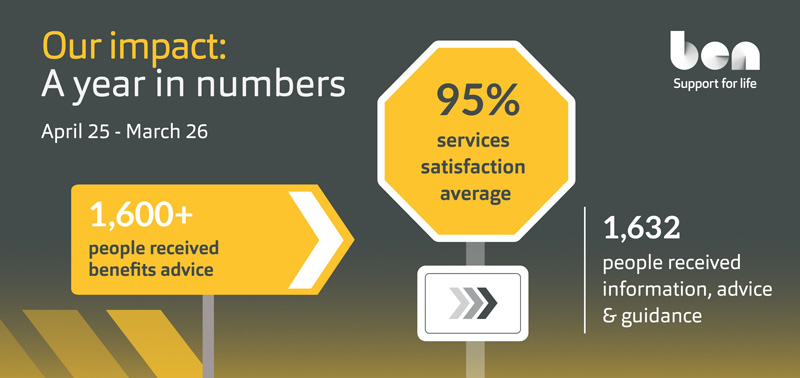
- 1,632 individuals received general information, advice, and guidance
- 1,605 individuals received benefits advice and financial guidance
- 573 financial grants were awarded
- 468 individuals received Ben Therapy
- 263 individuals received Life Coaching
- 528 activations of SilverCloud, Ben’s digital mental health support platform
Ben consistently maintained a high satisfaction rate (95 per cent) across all services.
Online and digital support demand remained high
There were over 52,000 website visitors and 77,000 support page views. Over 1,000 individuals subscribed to health and wellbeing tips, advice, and tools via email – an 8 per cent increase – bringing the total subscribers to 15,500.
The most visited online support content addressed current automotive challenges, including mental health, SilverCloud digital mental health support, interview skills guidance, redundancy rights, and financial advice.
Ben also supported automotive employers through training, health checks, and urgent response services. In the year, 445 individuals completed training courses, 76 had health checks, and 59 received support after traumatic incidents.
Q. What were the main reasons for individuals requesting Ben’s support?
A. During April 2025 to March 2026, the primary reason people reached out was for support with their mental health (60 per cent), followed by finances (32), physical health (4), and social health – including relationships/loneliness (4).
Mental health is the biggest reason people have been contacting Ben, which includes stress, anxiety, depression, and burnout. Financial pressures are also a significant issue, particularly with the rising cost of living, and money worries can often have a direct impact on someone’s mental well-being. Relationship difficulties, bereavement, and workplace pressures are also common issues, and many people are facing multiple challenges at the same time. We’re seeing a mixture of challenges which are often connected and more complex cases than ever before.
Q. Is Ben able to shed light on the split between age ranges and give examples of what those specific categories were enquiring to Ben for?
A. We support people of all ages across the automotive industry, and the reasons for reaching out can vary depending on life stage and circumstances. That said, the trend we’re seeing is that younger people are the ones needing support with their mental health the most, and financial worries are growing as people get older.
At Ben, we tailor our support to each individual and their unique situation.
Q. From a motor factor perspective, are you able to share examples of what challenges they are facing?
A. Motor factors can face a range of pressures, including stress from demanding workloads, long hours, staffing shortages, and physical issues from the nature of their roles. Handling tight margins, customer expectations, and targets can also be stressful.
For some, financial concerns and trying to maintain a work-life balance can add to the stress. Stress can build over time and affect a person’s mental and physical health and well-being.
Q. In Ben’s view, what are the biggest barriers preventing automotive workers from asking for help?
A. For many people, it’s taking that first step to seeking support that’s the hardest. Some people feel their problems aren’t serious enough, or that there are others who are more deserving of support. Others find it difficult to admit they’re struggling, particularly in a male-dominated industry where they are used to getting on with things and not wanting to seem vulnerable.
For some people, pride can play a role, and there can still be stigma around opening up about mental health issues or other more personal challenges. We want people to know they don’t have to reach a crisis point before asking for help. We are here for them, and we want to hear from them.
Q. What outcomes do you measure after someone receives support?
A. We measure outcomes in several ways to understand the impact of the support we provide. For our wider support services, we use the Wellbeing Outcomes Star to track the ‘distance travelled’ by everyone. This helps us measure positive change across different areas of need over time. A baseline score is recorded at the start of support and reviewed again at case closure to assess progress.
For more clinical services, including counselling, Spectrum and SilverCloud, we use recognised clinical outcome measures, such as CORE-10, PHQ-9 and GAD-7. These help us assess changes in areas, such as mood, stress, depression and anxiety levels throughout the course of support.
More broadly, we look at outcomes including improvements in mental health and wellbeing, reduced stress and anxiety, increased financial stability and greater confidence in managing personal challenges. We also gather feedback directly from the people we support to better understand how our services have helped them move forward. Ultimately, our focus is on helping people feel more in control of their lives, better equipped to manage current challenges and more resilient for the future.
Q. Do you think the industry has improved in its approach to well-being over recent years?
A. Yes, we’ve seen some positive progress across the automotive industry in recent years. There is greater awareness and more open conversation, especially around mental health, than there was years ago.
More employers are recognising the importance of supporting their people and creating healthier workplace cultures; however, there is still more work to do, particularly around reducing stigma and ensuring people feel comfortable asking for help early when they are starting to struggle and not waiting to reach crisis point. We are also going to be heavily focused on raising awareness about Ben and our services in the years ahead, which will be very important so we can help more people.