


Important questions about oil specifications
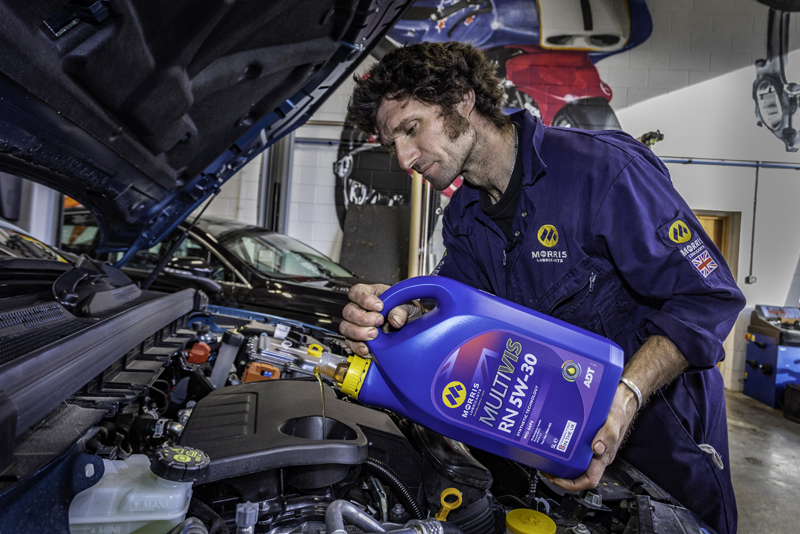
Not so long ago, it felt like there were just a handful of engine oil grades that could be put in almost any vehicle. Fast forward to today, and this is no longer the case, with a multitude of engine oil viscosities, specifications and formulations needed to fit a wide variety of engine types. Morris Lubricants Technology Manager, Adrian Hill, investigates frequently asked but important questions.
Why are there so many engine oils
New engine oils follow tailored specifications, and these new oil formulations are not released into the market because it seems like a good idea at the time. Their introduction to the market is based on sound technical reasons, substantiated with serious levels of research and development that require a considerable amount of time and money. This is all to make sure that the engine oil performs correctly when poured into a vehicle’s engine.
Therefore, new engine oil specifications and formulations are introduced by necessity, as we primarily see changes in emissions legislation that directly affect engine design. Right now, we are in a period of rapid change as the pressure to reduce environmental impact ramps up and the OEMs react with innovative strategies to comply with the latest legislation.
Modifications in engine design and construction can add more stresses, and strains on engine components that existing engine oil specifications and formulations are unable to accommodate. Also add in the domino effect of incorporating after treatment devices in the exhaust system, and we see new oil specifications and formulations appear. As engine designs become more complex, we may even see the creation of new molecules if existing engine oil formulations are falling short. Developing new engine oils is not a simple or quick process. It can be years in the making before the right chemistry and formulations needed to achieve the desired results are commercially available in the aftermarket.
The qualification process for a new engine oil is a precise and detailed journey, with the end goal being to satisfy the demands of the OEM or an international specification or standard. Once complete, following intense bench, rig and field trial testing, the data generated, as proof of performance, is collated in a document referred to as the Candidate Data Package (CDP). An essential piece of paperwork that every reputable oil manufacturer should have available.
Why are there now so many engine oil specifications and formulations ?
There are a plethora of changes and challenges that have faced the engine oil industry over multiple decades since the introduction of turbochargers on heavy duty diesel engines post-World War II. The simple oil formulations preceding that time were not up to the job, and improvements in chemistry and composition were needed. To provide a flavour of the challenges that drive the evolution of new engine oil specifications and formulations, we have selected just a few of the issues that modern oil formulations address in the most common engine types present on today’s roads: petrol, diesel and hybrids.
What about oil for petrol engines?
As a trend, petrol engines are slowly pushing diesel engines out of the running, together with a continued decrease in cubic capacity. Thumping V8 petrol engines are rare, and manufacturers are driving engine sizes down whilst attempting to keep power outputs the same or at respectable levels. There are certainly examples of 1.6L petrol engines achieving in excess of 700bhp. Of course, this is in the world of motorsport, where a lot of road-going technology and innovative engine solutions originate from. On the roads today, you can see engines with small capacities such as 900cc, 1.0L and 1.2L, some may be with only three cylinders, fitted with turbos or superchargers to ensure good workable power outputs.
This is not all good news; in recent years, we have seen the phenomenon of Low-Speed Pre-Ignition (LSPI) raise its head, an effect that can cause catastrophic engine damage with small capacity, highpowered engines under hard acceleration. This is a consequence of the increased use of gasoline direct injection (GDI) and high combustion chamber pressures. GDI introduces the fuel more efficiently to help reduce emissions, improve fuel efficiency, and contribute to high power output.
However, following the induction stroke in the combustion cycle and the subsequent compression of the fuel and air mixture, an uncontrolled combustion event can take place that can literally blow holes in pistons. Fuel can pool on the piston crown, mixing with the engine oil, and as the compression builds, the fuel and air mixture combusts before the spark plug does its job. A fraction of a second later, the spark plug fires, and you then have two energy fronts that clash and cause this catastrophic damage. Oil formulators, having researched this, concluded that calcium compounds, responsible for detergency (cleaning) and acid neutralisation, can contribute to LSPI if there is a high level of calcium compounds present. New engine oil specifications now have controlled levels of calcium compounds which are helping to eliminate LSPI.

What about oil for diesel engines?
Diesel engines have also had their challenges over the years, and the introduction of DPFs heralded a new era of engine oil specifications. The job of the DPF is to capture soot from the exhaust gases to prevent it from getting into the atmosphere. A pressure differential sensor measures the working pressure across the DPF. When a minimum value is reached, the engine management system will start a regeneration cycle. The fuel system overfuels, and the unburnt diesel flashes off at around 620oC in the DPF, converting carbon (soot/solid) to carbon dioxide (gas), which effectively resets the working pressure. However, during lubrication of the top compression rings, valve stems, and valve guides, a small amount of engine oil is incinerated, creating a metallic ash (from calcium, magnesium and zinc compounds). This ash is caught in the DPF but is not purged during the regeneration cycle. Eventually, the DPF will not be able to return to a normal system pressure, resulting in the vehicle switching to limp mode or to a complete shutdown. The engine oil needs to be formulated with a balance of chemistry, to ensure that the engine components are protected, but the DPF also reaches its intended service life. When DPFs were added to the exhaust system, diesel engine oil specifications had to be changed and developed accordingly.
What about oil for hybrid engines?
Hybrid engines have been around for a while now, and, of course, provide huge advantages when it comes to reducing emissions. The big challenge here is the ability of the oil to cope with rapid start circulation due to the stop/start nature of its operation, ultimately required to reduce fuel usage.
Depending on the type of hybrid configuration, the internal combustion engine may have to start from cold and immediately find itself doing 70mph. The engine oil must be capable of being pumped from the sump to the critical valve gear and bearings in a blink; otherwise, catastrophic wear on the engine components will take place! Only the latest engine oil specifications and formulations with advanced base oils and chemical additives make this possible.
Will this evolution continue? Absolutely! We have only touched on a few operational challenges that must be addressed to ensure engine longevity and emission compliance. As there is a continued push for further engine improvements and different designs, the demands on the engine oil will only increase. The OEMs have their own agendas and future strategies, and new engine specifications will continue to be released. Finally, we must not forget that the engine oil is a critical component of the engine and contributes to reduced environmental impact.