


How cold weather affects emissions control devices
Cold weather challenges for emissions control devices and how to prevent them
As temperatures fall and storm Goretti arrives, Europe’s leading manufacturer of aftermarket hot end emissions products emphasise the tough operating conditions set to be bestowed upon vehicles and their emissions control devices.
Winter weather brings unique challenges for emissions control devices such as catalytic converters (CATs) and diesel particular filter (DPFs), particularly during cold starts and in sub-zero temperatures. Understanding these issues, and how to prevent them is the key to maintaining vehicle performance, reliability and emissions control.
Cold starts are one of the most demanding operating phases for emissions systems. When the engine is cold and the emissions component is yet to reach optimal operating temperature, fuel atomisation is reduced leading to a richer air-fuel mixture, resulting in incomplete combustion. Higher volumes of unburned hydrocarbons and carbon monoxide enter the internal structure of emissions control device amounting to pollutants being converted less effectively.
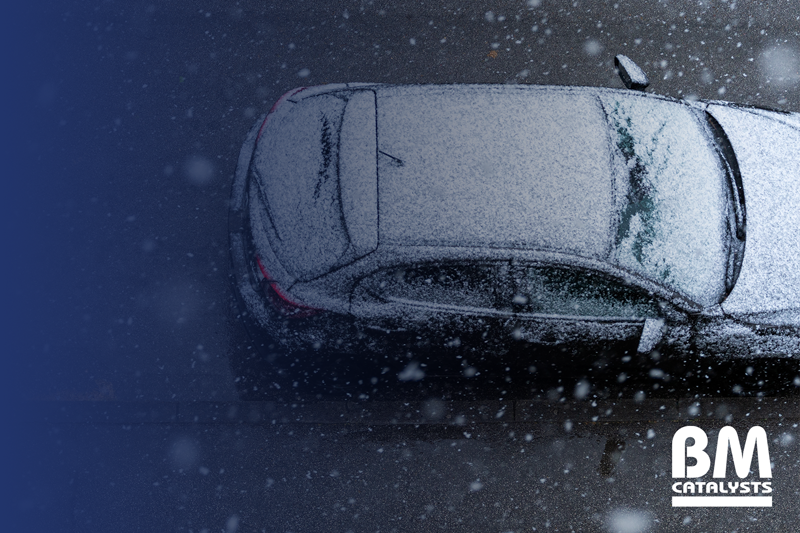
In extreme winter conditions, frost, ice and snow can accumulate within the exhaust system. This build-up can restrict exhaust gas flow, creating back pressure in the engine Potentially reducing engine power and performance. Prolonged restriction can also cause physical damage within the emissions control system.
Repeated operation in low temperatures also brings long-term risks. Over time, PGM’s within the internal monolith become less effective due to carbon and sulphur deposits. This is compounded by excessive thermal stress. This reduces the systems effectiveness to convert pollutants efficiently and may ultimately lead to failure if not addressed.
There are, however, preventative measures to reduce winter related emissions issues. A simple yet effective step to reducing these issues is to follow manufacturer recommendations on maintenance. Another method is ensuring adequate time to allow the engine to reach full operating temperature. Where possible, avoiding repeated short journeys also plays a part in preventing the issues from occurring. When using the vehicle, attention to sudden acceleration and smooth driving habits also reduce risk of temperature related exhaust component failure.
Choosing high-quality exhaust components is critical to reducing these risks. Premium emissions control systems with advanced formulation and construction help the device reach operating temperatures quicker and maintain efficiency across a wide range of conditions such as sub-zero temperatures, snow, ice and frost.
BM Catalysts’ premium silicon carbide (SiC) DPF range has been specifically designed to perform exceptionally even in demanding winter conditions. With high thermal conductivity, SiC helps the DPF achieve and maintain effective operating temperatures in cold environments where regeneration can be more challenging.
With a low thermal expansion coefficient SiC maintains dimensional stability during rapid temperature changes, supporting durability and structural integrity.
BM Catalysts’ SiC DPF range offer superior resistance to thermal shock by combining the SiC balance of strength, elasticity and expansion characteristics. This is particularly important during extreme cold starts or rapid temperature variations, where lesser materials may crack or degrade.
BM Catalysts continues to develop premium emissions control solutions designed to meet these challenges head on, helping vehicles perform efficiently even when temperatures drop.