

Adapting to the evolving aftermarket
EVs, fast-fit, and rising costs are contributing to the trade’s evolution; therefore, you are likely facing increasing pressure to balance profitability, customer satisfaction and operational efficiency. That’s the view of MANN+HUMMEL Product and Marketing Manager – Aftermarket, Gary Winslow.
The question is whether you should focus on premium, high-quality products or compete primarily on price? Understanding how these choices impact profitability and how other details can make a difference is crucial for longterm success.
At MANN+HUMMEL, we recognise this is an important – and sometimes challenging – topic.
Do workshops actually benefit from fitting premium filters? Well, in short, yes. This is very much a mindset issue with some workshops, though, with two popular approaches:
- Price-driven: Volume focused, aiming to attract more customer footfall with lower service costs.
- Quality-driven: Added-value proposition, differentiating their business via reliability and long-term benefits for the customer from using premium brand components.
Investment and initiative
So, the benefits of supplying quality filters can be tangible, from profit to reputation to new and repeat business. These benefits can be further enhanced, though, by some extra activity and investment:
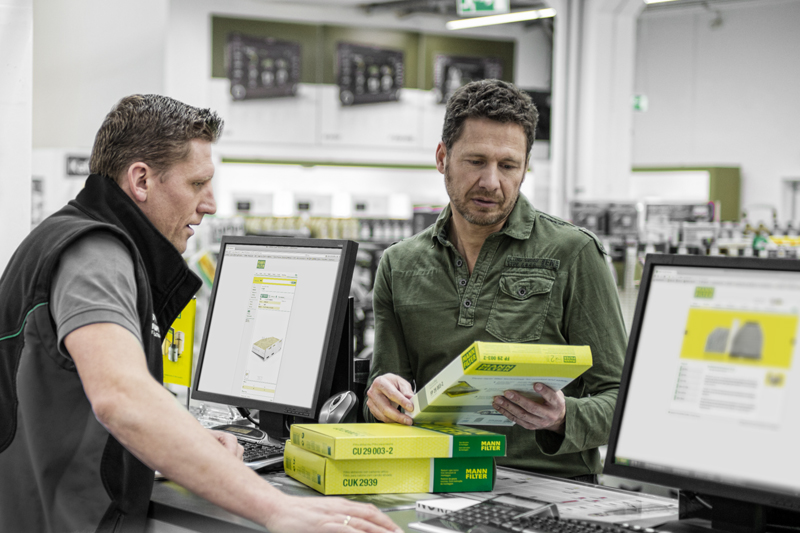
Those motor factors that take time to educate customers/workshops about the benefits of premium products (e.g. reduced failures, longer lifespan) can justify higher prices. Furthermore, by working closely with premium suppliers, this often includes access to technical training and marketing to support telesales and branch staff in learning how to efficiently upsell premium benefits. A brand ambassador can accompany staff to workshops that require more education or insight.
Advantages of supplying premium filters
Higher margins: Premium products, such as high-quality filters like MANN-FILTER, often come with higher margins compared to budget alternatives. Better margin means more profit.
Customer trust: Offering reputable and known quality brands builds customer trust and repeat business. If you supply such brands, you become a go-to option rather than requiring a ‘push’ approach.
Reduced warranty claims: Quality parts reduce the risk of failures, minimising costly reworks and protecting the reputation of the garage. Both you – especially at branch level – and the workshop benefit from no recalls or corrective action and, ultimately, customer peace of mind.
Challenges relating to supplying premium filters
Upfront cost: Premium products require a higher initial investment, which can be a barrier for price-sensitive workshops.
Sales skills and upselling required: Staff must be able to explain the value of premium products to justify any price difference. Often, without intrinsic knowledge of a particular brand, this can be a ‘hard sell’ to a price-conscious technician or trade-counter customer.
Conclusion
The motor factor that supplies premium, quality products as part of its product mix can achieve higher profitability, stronger garage customer loyalty and a more resilient business model – however, success depends on more than just the products themselves!
Customer education, supplier relationships, service quality – delivery times and availability, for example – and digital innovation all play critical roles in differentiating a parts distributor in an evercrowded and price-sensitive market.
Profit from premium is real – but only when combining quality products with education, service excellence and smart business practices.