


DENSO on spark and glow plug technology

As well as being an OE spark and glow plug manufacturer, supplying many VMs globally, DENSO is also a technical partner of Toyota Gazoo Racing and several other motorsport teams. The company says this puts it in “prime position” to identify and supply distributors with a spark and glow plug solution to suit their needs.
DENSO says materials used in its spark plugs – such as special ceramic insulators and the precious metals used in the iridium and platinum alloys for electrodes – can withstand very high temperatures in the engine and combustion chamber.
Reducing ignition lag inconsistencies
DENSO says the delay time for the ignition lag period can be inconsistent and can vary from one combustion cycle to the next. These inconsistencies will then shorten or lengthen the whole combustion process, which will advance or retard the exact time that the maximum cylinder pressure occurs. Engine manufacturers must, therefore, provide a safety margin for the ignition timing calculations to ensure that ignition timing and combustion do not occur too early.
DENSO reports its spark plug technologies include the use of fine electrodes that help to reduce the inconsistencies of ignition lag, and this then allows engine manufacturers to build in smaller safety margins for the ignition timing so that it can be closer to the optimum setting, which improves combustion and engine efficiency.
Electrode shape
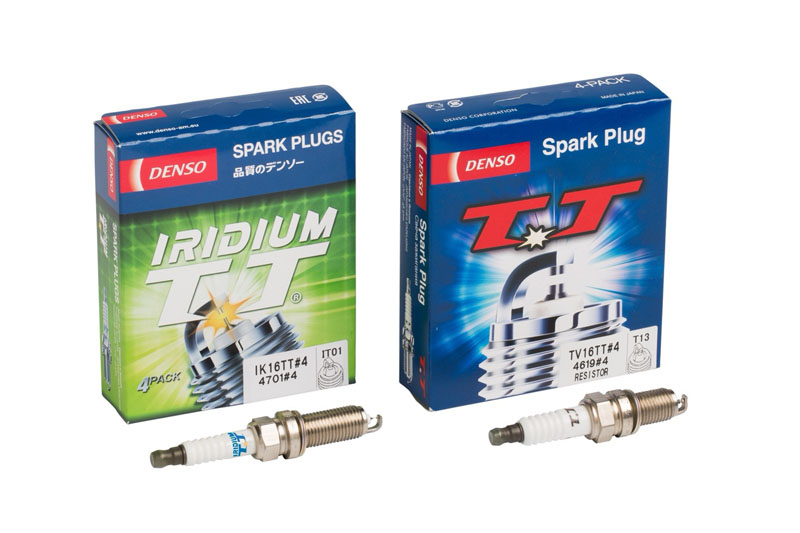
DENSO produces a range of spark plugs with different electrode shapes and sizes that help to reduce the ‘quenching effect’ for different engine applications.
DENSO says bigger electrodes block more of the flame growth, whilst the smallest electrodes will enable improved 3D growth. The company says with its 0.4 mm centre electrode and Twin Tip (TT) technology, smaller electrodes improve ignition and, subsequently, engine performance.
High voltage solutions
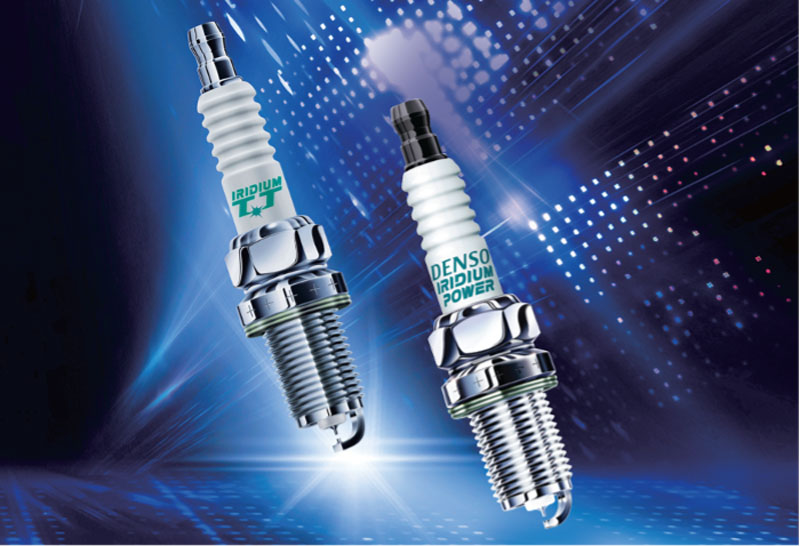
To help overcome the challenges associated with needing increasingly higher voltages to create a spark, DENSO produces a range of spark plugs with smaller electrodes – manufactured using precious metals such as iridium. The smaller electrodes reduce the voltage requirement, and the iridium provides a high-temperature-resistant and hard-wearing surface for the electrodes.
For many vehicles, DENSO’s range allows the standard specification spark plugs fitted to be upgraded, which reduces the required ignition voltage and provides an “easier life” for the ignition system and should improve engine performance.
What’s more, DENSO says it produces a range of spark plugs with electrodes manufactured using precious metals that help to reduce electrode wear. The company says that by applying advanced technologies, like the DENSO TT, it results in better performance over a longer period.
What about glow plugs?
Due to the fact that the fuel/air mixture in a diesel engine spontaneously combusts when under high pressure in the combustion chamber, it requires no spark; however, the primary role of the glow plug is to aid the starting process by heating up the mixture – when the engine is cold.
Developed in the 1920s, the design remained largely unchanged until the 1970s when external coil technology was superseded by a covered coil, which persists with modern glow plugs today. The single coil glow plugs of the 1970s were gradually replaced by double coil versions in the 1980s. Ceramic glow plugs then took over in the 1990s and instant heating glow plugs became the standard in the 2000s, a design that remains popular today.
Unlike spark plugs, which are subject to VM-specified replacement intervals, glow plugs generally have no such stipulation, so how do technicians know when they should be replaced?
As with any vehicle component, the glow plug has a lifespan, which would broadly be defined by the number of heat cycles it can go through before it starts losing performance. DENSO says this is very difficult to correlate with the distance a vehicle travels annually, because it is associated with the number of engine starts – and latterly diesel after-treatment cycles – the glow plugs have to activate for, rather than the distance the vehicle has travelled.
DENSO believes post-pandemic driving habits of fewer journeys and of a reduced distance have had a disproportionate impact on diesel-fuelled cars over their petrol-fuelled cousins, and this is largely because of the thermally efficient nature of the diesel engine and the time it takes to reach its designed operating temperature.
As it is fundamentally the temperature of the oil that accurately defines the temperature of the engine, and the oil can often take more than 20km of driving to reach its optimal temperature, this has big implications on the performance of the engine, including the glow plugs. DENSO says the more ‘cold starts’ they make without then reaching their designed engine operating temperature, the faster they will wear out.
To make matters worse, because the glow plug now has a role in the DPF regeneration process, to temporarily raise the temperature of the exhaust gases so they can burn off the soot captured in the filter, DENSO says they have to work extra hard on vehicles that only travel short distances to activate the process that would happen naturally during the course of its use in a vehicle that travelled longer distances.
In short, although vehicles are typically being used less, the glow plugs are having to work harder, which means they need to be replaced more frequently.
Consequently, warning signs of potential glow plug problems range from having trouble starting the engine from cold, to an inability to successfully regenerate the DPF. So, despite being a relatively small component, glow plugs have a big influence on the performance of the engine, which is why, DENSO believes, having premium-quality products is important.