

How to choose the right engine oil
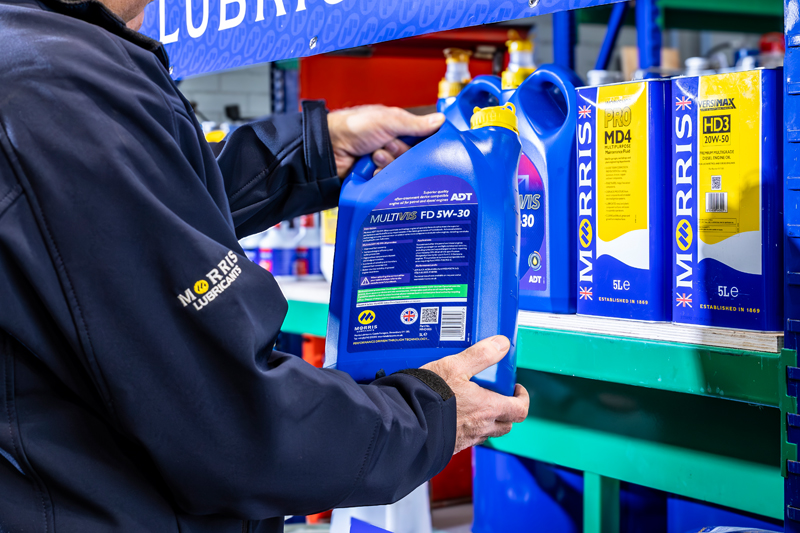
Should one concern themselves when choosing and then using an engine oil in a passenger car? What will happen if the wrong oil is used? Engine oils can all look the same, so does it really matter what is used? Can different oils be mixed as a top-up? Can some old unused engine oil be used? What could possibly go wrong? To answer these questions, here’s Morris Lubricants Technical Director, Adrian Hill.
Motor factors need to advise their customers that even though many engine oils may look the same, using the correct oil is a must. Reputations may suffer if, for example, customers experience problems between servicing due to poor engine oil choice and use. Customers may experience unusual smoke from the exhaust, frequent oil top-ups, bizarre noises/rattles, reduced power or unexpected component failure if the wrong engine oils have been used.
The formulations for engine oils used in passenger cars are continually evolving. Using the correct oil, therefore, is critical to maintaining the car’s operational efficiency, emissions control and its longevity on the road. Also, the correct oils have a role to play in protecting the engine and its components as well as any aftertreatment devices that are fitted to the vehicle.
Engine oils matter
So, whether diesel, petrol or hybrid engines are used, one of the biggest challenges for engine oils is to provide maximum engine component protection. Using the wrong engine oil can have a big impact on engine efficiency, cause poor oil circulation as well as give rise to poor sludge and deposit control. These factors can generate major issues leading to the possibility of the engine overheating, putting the engine into limp home mode and at worst causing severe damage to the engine components.
For all engine types, the wrong oil can lead to poor corrosion control, leading to sticking valves that can reduce engine efficiency. Furthermore, a crucial role of the engine oil is to maintain the integrity of any aftertreatment devices fitted to the exhaust system, whilst protecting engine components, and this can be a tricky balance.
Aftermarket device protection
Aftertreatment devices that are required to control nitrogen oxide emissions and particulate matter are highly sensitive to engine oil chemistry. Too much sulphur and phosphorus, which are added to the oil formulations for anti-wear performance, for example, can poison catalysts used in AdBlue systems. Also, if the engine oil creates too much ash, it can prematurely block diesel and gasoline particulate filters. These are issues which over time may need the aftertreatment device to be replaced.
What about diesel engines?
In diesel engines, the use of the wrong engine oil can cause poor soot control that can lead to accelerated wear, due to its abrasive nature, as well as oil thickening, that can inhibit oil flow resulting in oil starvation and engine failure. Ring soot compaction is another consequence of using the wrong engine oil, which can prematurely wear piston rings and polish cylinder liners, leading to excessive blow-by and reduced power output.
Are hybrid engine oils different?
Hybrid engines throw additional challenges for the engine oil to overcome. Rapid engine oil circulation from cold, especially under intermittent operation, along with fuel and water contamination, cause the biggest issues for hybrid engines. Poorly selected engine oils can lead to camshaft, bearing, and piston ring wear. The engine oil needs to protect the oil pump from the effects of fuel and water and have increased corrosion control, but the oil formulation must also be balanced to protect aftertreatment devices and make sure they do not fail as well. Also, this could be an engine that has to go from 0-70 mph in seconds! There’s a lot that can go wrong if the incorrect engine oil is used.
It is a must to use the correct engine oil that complies with the specifications as set by the OEM. Using the correct engine oils helps maintain performance, give the best possible level of protection, and keep the vehicle on the road.
What about engine oil top ups?
It is also important to take care when topping up engine oils. Mixing different engine oils that have different specifications will have a negative impact on the overall ability of the mixed-up oil in the sump to protect the engine and its components. The OEMs require tailored oil formulations and added chemistry to ensure compliance with their guidelines. Adding different oils with different chemistry will reduce the mixed-up engine oil’s ability to perform effectively. It could also invalidate the vehicle’s warranty should there be an engine issue.
Can I mix and match viscosities and formulations?
It is important to match the engine oil viscosity grades with the manufacturer’s requirements, so for example, avoid mixing a 0W-20 engine oil with a 5W-30 engine oil. Using the wrong viscosity grades may have an impact on the engine’s fuel efficiency, which could be costly in terms of the amount of fuel used and then additionally the amount of emissions produced. Correct viscosity grade choice becomes even more vital if we are looking at hybrid engines, due to their operational cycle as outlined earlier. Lower viscosity grades, such as 0W-8, 0W-16 and 0W-20, are essential for rapid circulation – otherwise accelerated wear issues can occur.
The other mismatch to consider is engine oil formulation and chemistry. As highlighted earlier, with the advent of aftertreatment devices to control emissions, older-style engine oils that have older chemical profiles can cause damage, even when used as a top-up.
If the engine oil is not the same, don’t mix and match it with something else!
What about using old unsaved oil?
Unused engine oil has a shelf life and does not last forever. Unopened engine oil, if stored in dry conditions away from extremes of temperature, can last several years; however, once the container has been opened, the engine oil’s shelf life will be shortened and should be used within a two-year period. Once the container seal has been broken, oxygen and moisture can enter and can cause the active chemical compounds to slowly break down and reduce the engine oil’s effectiveness. Exposure to significant temperature fluctuations can also make matters worse.
Help is on hand!
At Morris Lubricants, we understand that choosing the correct engine oil can be a minefield; therefore, we provide help via WhatOil, our online engine oil look-up tool. This is found on www.rdr.link. This provides engine oil requirements for a wide range of makes and models of passenger cars.
By entering the car’s make and model or registration number, the exact engine oils are displayed. The data in WhatOil has been collated through liaison with the OEMs and has been vetted.
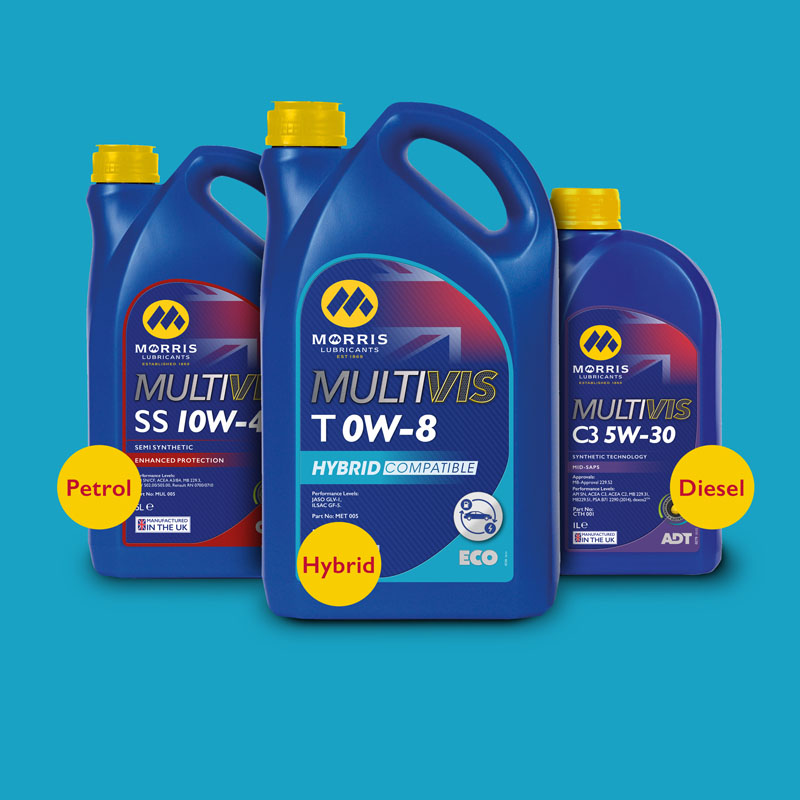
Multivis provides a range of engine oils that are formulated for use in many different brands of diesel, petrol or hybrid engines. Their chemical profiles and precise oil formulations are tailored to OEM specifications and help ensure maximum component protection and aftertreatment device compatibility.