

Why are HID bulb sales increasing?
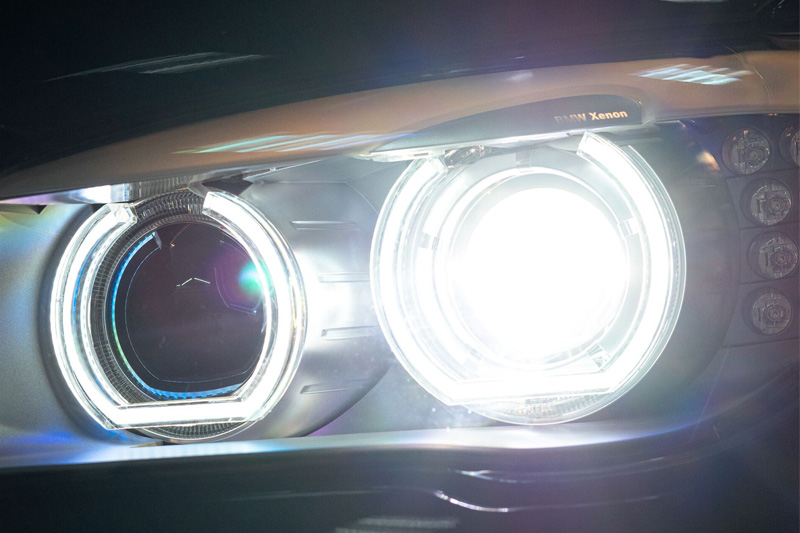
OSRAM has revealed that its sales of HID bulbs are growing – with some customers seeing a reported 50% increase in sales themselves – what does the OEM put it down to?
First introduced in 1991, HID bulbs quickly became a common bulb to use in vehicle headlights, with the BMW 7 Series the first to debut the world’s first xenon headlamp system. While technology has evolved since then and factory-fitted lighting in new cars are now typically moving towards LED, notes OSRAM, there are still millions of cars that have HID bulbs fitted as standard and many more that will require replacement because of failure and end of life.
OSRAM claims its HIDs typically use less energy and have a longer lifespan than halogen bulbs. Throughout the 1990s and 2000s, HID lighting rapidly spread from luxury flagships to mainstream models. Manufacturers and lighting specialists worked in tandem to refine the technology, developing compact bulb formats and advanced electronic ballasts that would soon become industry standards. As demand increased, OSRAM played a “pivotal role” in delivering HID solutions.
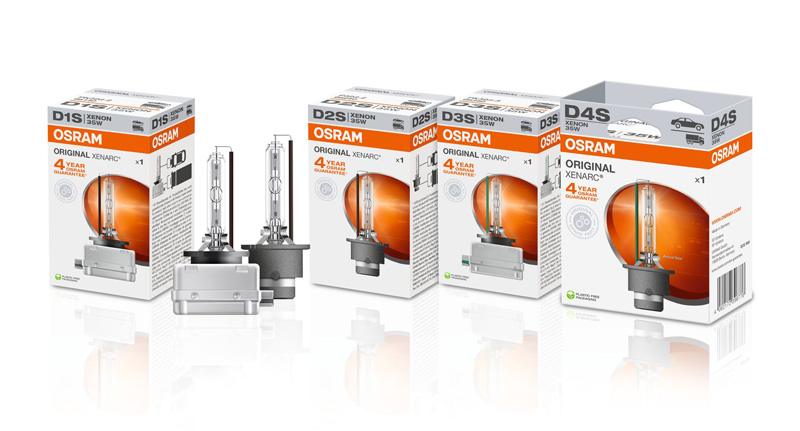
What’s inside HID range?
Today, OSRAM’s XENARC HID range comprises innovation backed by decades of expertise and a reputation as an OEM. Products that are prominent in this portfolio include the XENARC NIGHT BREAKER 220, which is OSRAM’s brightest HID upgrade bulb. It has a 250m long beam and up to 20% whiter light, allowing drivers to see further and, therefore, respond to the conditions on the road earlier.
If a driver is looking for more, whiter light, OSRAM offers the XENARC COOL BLUE INTENSE range, which offers up to 150% more brightness than the minimum legal standard; however, if a driver is focused on a reliable bulb that will last a very long time, OSRAM’s XENARC ULTRA LIFE has a 10-year guarantee. This is up to four times longer than a standard HID bulb.
Finally, OSRAM has the XENARC ORIGINAL range, which has a four-year guarantee and is OE quality. These bulbs fit a variety of vehicles, are manufactured in Germany and are the same as those fitted at point of manufacturing.
Terri Clark, OSRAM’s marketing manager, admitted the company is unsure if the winter selling period has grown this year or is a general lifecycle trend. Nevertheless, PMF put some questions to Terri to find out more about OSRAM’s HID range and trends the company is seeing:

Q. While OSRAM is unsure what’s driving the demand, have customers offered any suggestions themselves?
A. We are currently in a phase of change when it comes to lighting. OE LED homologated units are being fitted as standard to lots of new vehicles; however, the HID revolution started in the 1990s and continued to grow into the 2010s. When LEDs started to become more popular and vehicle designers and manufacturers preferred the LED alternative, HID fell away, but the numbers of HIDs in use were still much larger than LEDs.
With an ageing car parc, this would mean there are cars dating back to 2016 and beyond with HIDs. Combined with the fact that HID bulbs tend to last five years, we are seeing that cycle of replacement for vehicles made in 2016 up to 2021. Probably the last years of HIDs being fitted in large numbers – before LED headlight units really took off.
Another reason – and we don’t sell these, so difficult to understand – is that HID conversion kits could have come back in popularity. These are used and fitted to replicate the LED look. While not road legal, for many motorists who want the LED look, fitting an HID conversion kit is cheaper than replacing headlights with OE LED light units. To reiterate, we don’t sell conversions kits so don’t have data to test this.
Over the 20-plus years of HIDs in the market, the technology has become familiar, and more and more workshops understand how to work with HID systems.
This could also be another reason for the growth. No longer are the workshops sending customers back to main dealers and HIDs being pulled through the OE supply chain. Instead, the aftermarket is now pulling the product through.
Q. Which vehicles are seeing high HID replacement demand?
A. Whilst we don’t have access to detailed replacement numbers, as a guide we would say the most common vehicles that have Xenon/HID bulbs fitted are the premium German and Japanese car brands, like BMW 3 Series, 5 Series, 7 Series; Audi A4, A6, Q5; Mercedes‑Benz C‑Class, E‑Class; Lexus IS/GS and Mazda 6/CX‑5.
Q. Are there any common fitting issues or misconceptions factors should advise workshops about?
A. When HIDs first came out the misconception was due to the high voltage meant they were dangerous. Often, independent garages would refer them back to main dealers, but as explained in answer one, HIDs and the technology are now familiar systems.
Q. How can factors best utilise OSRAM’s support or promotions to boost HID sales?
A. We have a complete SKU offering of all the different HID types, including some more recently launched types: D5S and the D8S. There is a wide range of upgrade options to maximise choice and profit (see here), as well as a useful vehicle application look-up service for correct fitment.