

Why is year-round readiness important

For decades, winter played a pivotal role for the automotive aftermarket, with freezing temperatures and icy roads driving failures and demand. Brands like Autoelectro and BM Catalysts prepared for this predictable surge. Today, though, seasonality is less clear-cut, making year-round vigilance just as important as winter preparation.
Traditionally, winter marked the peak season for component failures, with freezing temperatures, snow and icy conditions placing extra strain on vehicles. January has historically been Autoelectro’s busiest month, as cold starts make engine oil more viscous, increased use of headlights, heated seats and wiper blades strain the alternator, and batteries operating below optimal condition can fail to deliver sufficient power to the starter motor. Even the incorrect use of jump starters can lead to unwelcome failures for motorists.
However, in recent years, the remanufacturer has seen this winter surge become less pronounced. With modern vehicles integrating increasingly complex electrical systems – adaptive cruise control, lane departure warning, blindspot monitoring, and automated parking – continuous load is placed on charging systems throughout the year. Autoelectro has observed accelerated wear and higher failure rates as a result, moving demand away from traditional seasonal peaks toward consistent year-round enquiries.
The rise of the 48V MHEV technology
Autoelectro argues this shift in electrical demand has driven the rapid adoption of 48V mild-hybrid (MHEV) charging systems. These incorporate a new generation of starter motors and alternators, which are advanced but sensitive and tightly integrated within electrical systems and software.
A belted starter generator (BSG), for example, is an electric motor-generator unit that integrates aspects of traditional starter motors and alternators, particularly in vehicles fitted with 48V MHEV charging systems. It is a single belt-driven unit mounted to the engine that can both start the engine, generate electrical power, bolster fuel efficiency and reduce emissions.
Industry analysis indicates that MHEVs represent a significant proportion of new hybrid vehicle registrations, with the majority of modern MHEV applications utilising 48V charging systems. Based on registration trends over recent years, Autoelectro is confident that this trend will continue, as VMs increasingly adopt this technology, and the rotating electrics specialist expects the automotive aftermarket to absorb this demand.
Best practice tips
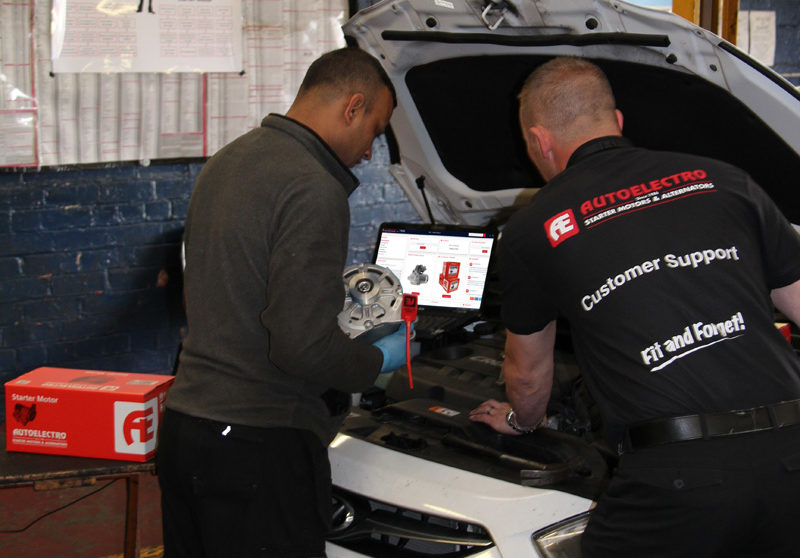
While traditional seasonality may be diminishing for Autoelectro, preventative maintenance remains crucial year-round – an important message to share with workshops:
- Inspect the belt for cracks, breaks or damage; a broken belt can slip on the pulley and lead to charging problems
- Check the tensioner is in good condition
- Moisture and condensation from the engine can drip onto the terminals and arc/spark when the terminal is live – leaving potential for heat damage
- Test the battery state-of-charge to ensure it delivers sufficient current in cold conditions
- Assess electrical connections for corrosion, looseness or wear
- Are diagnostics up to date? Many MHEVs rely on software-controlled charging management
- Unusual noises or vibrations from the BSG could indicate early wear or misalignment
- Ensure fuses and relays are intact and free from heat
Cold weather challenges for emissions control devices
Just as cold weather can accelerate wear on electrical systems, it also poses specific challenges for emissions control devices. CATs and DPFs face additional stress during winter, when engines operate below optimal temperature and exhaust components struggle to reach their efficient operating range. Understanding these seasonal pressures is key to preventing long-term damage and maintaining vehicle performance, according to BM Catalysts.
The manufacturer notes that cold starts reduce fuel atomisation, resulting in richer air-fuel mixtures and incomplete combustion. This increases pollutants entering the system. What’s more, in extreme conditions, frost, ice and snow can restrict exhaust gas flow, reduce engine performance and potentially cause long-term damage.
Long-term risks
Repeated use in low temperatures also brings long-term risks, reveals BM Catalysts. Over time, PGMs within the internal monolith become less effective due to carbon and sulphur deposits. This is compounded by excessive thermal stress, which reduces the system’s effectiveness to convert pollutants efficiently and may, ultimately, lead to failure if not addressed.
Reassuringly, like with rotating electrics as stated, there are preventative measures available to reduce winter-related emissions issues. BM Catalysts lists some below:
- Follow manufacturer recommendations on maintenance
- Ensure adequate time to allow the engine to reach full operating temperature
- Where possible, avoid repeated short journeys
- Pay attention to sudden acceleration
- Smooth driving habits reduce risk of temperature related exhaust component failure
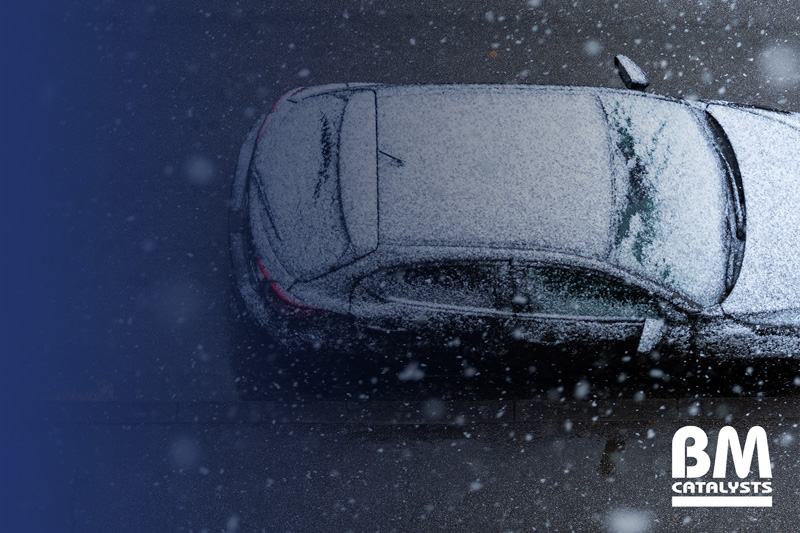
BM Catalysts insists that quality matters in these scenarios; specifically, premium emissions control systems with advanced formulation and construction will help the device reach operating temperatures quicker and maintain efficiency across a wide range of conditions.
The manufacturer has designed its premium SiC DPF range so it can perform in demanding winter conditions. With high thermal conductivity, SiC helps the DPF achieve and maintain effective operating temperatures in cold environments where regeneration can be more challenging.
With a low thermal expansion coefficient, SiC maintains dimensional stability during hostile and quick temperature changes, supporting durability and structural integrity.
BM Catalysts’ SiC DPF range resist thermal shock by combining the SiC balance of strength, elasticity and expansion characteristics. This is particularly important during extreme cold starts or rapid temperature variations, where lesser materials may crack or degrade.
Conclusion
Winter still matters. Cold starts, frost and snow place unique stresses on batteries, charging systems and emissions devices, making preventative maintenance during the colder months essential. Yet, the rise of 48V MHEVs, intelligent electrical systems and advanced emissions technologies has shifted some of this pressure into the rest of the year, creating a more evenly distributed demand across all seasons.
For Autoelectro, this means managing stock and service readiness beyond traditional peak months, while BM Catalysts emphasises the value of high-quality components to maintain performance – even in extreme conditions.
For more information about Autoelectro, click here.
For more information about BM Catalysts, click here.