Workshops can earn attractive, additional turnover with little effort – and you can also profit from supplying additives, the chemical problem solvers, according to LIQUI MOLY.
LIQUI MOLY believes additives are a simple but underestimated source of income for workshops, an important point you should point out to your customers when selling these products.
LIQUI MOLY Head of Applications Engineering, Harry Hartkorn, continued: “Not only do they bring in additional cash, but they also increase customer loyalty and help workshops distinguish themselves from the competition.”
The company has more than 60 years of experience with additives and is regarded as a leader in its home country of Germany. Every year millions of cans leave the assembly line at LIQUI MOLY.
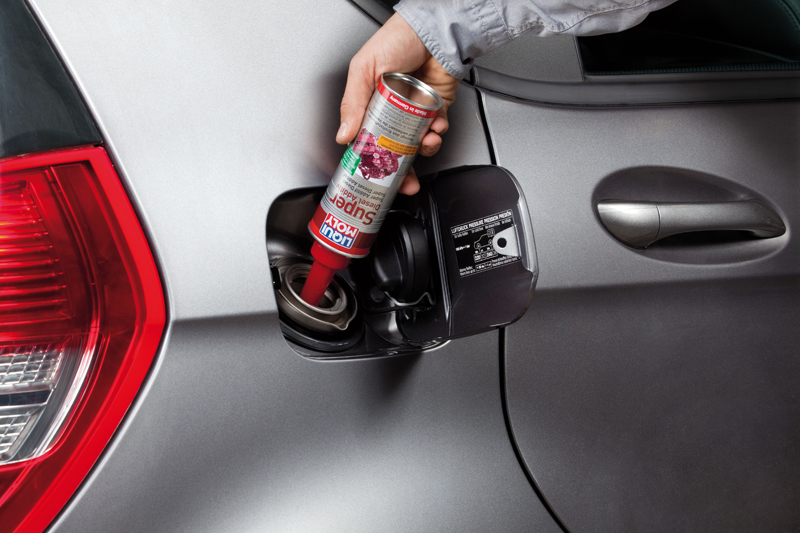
Additives are used in motor oil and transmission oil – for fuels and radiators. They improve the properties of the fluid, to which they are added and help to solve and prevent certain problems, such as rough engine running, fuel ageing, leaks in the oil or coolant circuit.
Harry continued: “Additives are chemical tools that should be in every professional’s toolbox. Just as every tool, they have a certain purpose, for which they are well suited.”
Here, Harry provides three sales arguments – all in favour of stocking and selling additives:
Chemical problem solver
Scenario: A car is brought into the workshop with a technical defect – a sticky gearbox, for example – which can be rectified with additives. This is frequently faster, simpler and more economical than mechanical repair. LIQUI MOLY has a solution with its gear oil additive. It is a special wear protection additive, which reduces friction in the gearbox, making it easy to shift.
In most cases it can solve the problem; the alternative would be to remove and disassemble the gearbox for diagnosis. That would require disproportionally more work and expense – and, according to LIQUI MOLY, the fault still would not be eliminated.
Service Packages
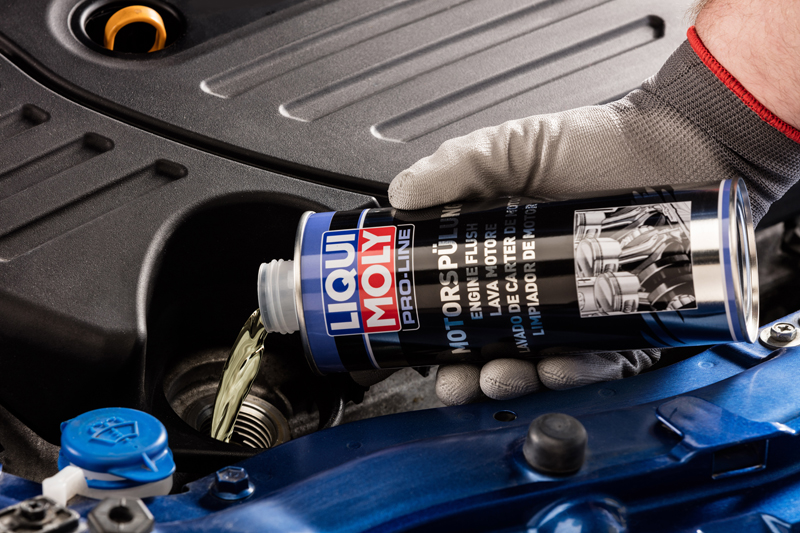
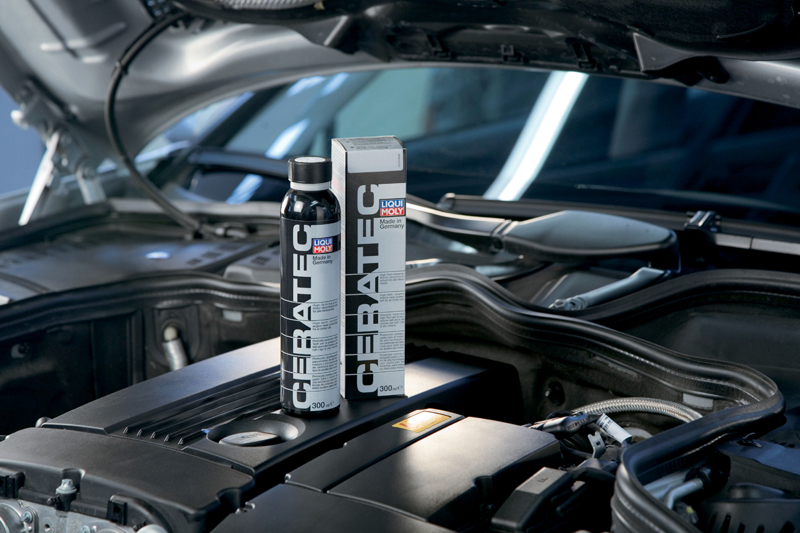
The second opportunity for using additives is the additional service within the scope of maintenance. When a car is brought in for an inspection, additives allow workshops to offer custom tailored service packages; for example, a special oil change instead of a regular one where the oil circuit could be cleaned with LIQUI MOLY Pro-Line Engine Flush first, and the fresh oil could be treated with wear protection additive Cera Tec afterwards.
Harry said: “The advantage is that with our additives, it is possible to offer a very wide variety of service packages. This allows workshops to offer precisely those services, which provide the maximum benefit and sales success for their customers. Use of additives is quick and easy, and it requires hardly any additional effort.”
Retail sale
The third opportunity to earn money with additives is retail sales to motorists. Many additives from LIQUI MOLY are suitable for regular use by the drivers. Super Diesel Additive, for instance, can be added to the fuel every 1,250 miles. It removes deposits in the diesel injection system and in the combustion chamber, preventing new deposits and protecting the entire fuel system against corrosion and wear.
The Hybrid Additive prevents problems associated with plug-in hybrid vehicles, like excessively old petrol or deposits in the injection system.
In conclusion
With the aid of additives, workshops can significantly increase their range of service and distinguish themselves from the competition. They provide proof of technical expertise and improve customer loyalty. And high-margin additives offer a significant increase in income with little work.
By stocking additives and supplying them by pointing out the additional income, you can offer your workshop customers products that are real sales drivers.