

How did Denso spark plugs perform in a drag race?
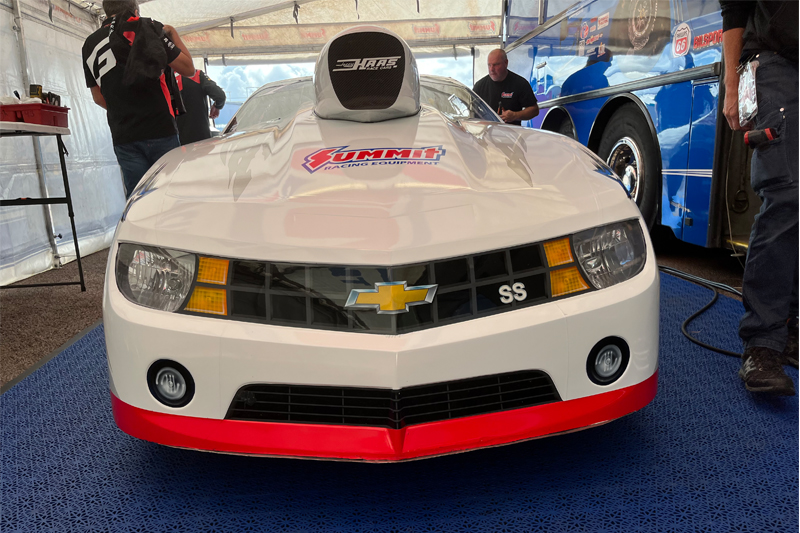
Motorsport pushes every component to the limit, but in drag racing no part works harder than the engine. At its core is the combustion process, and nothing is more critical than a reliable spark – the split-second ignition that unleashes maximum power.
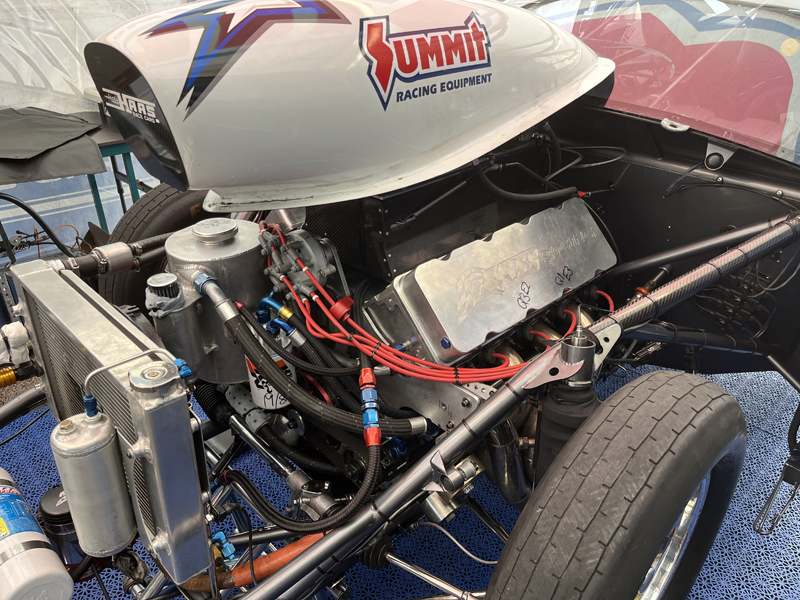
Although DENSO is a prominent name across many areas of motorsport, its UK drag racing debut came at Santa Pod Raceway in Bedfordshire in September. The brand supported 13-time European FIA Pro Stock champion, Jimmy Ålund, supplying Iridium Power IXU27 spark plugs for the 8.2L V8 engine powering his Chevrolet Camaro SS Pro Stock machine.
Drag racing is an acceleration contest between two vehicles, competing over a quarter of a mile from a standing start, and is run after qualifying in tournament style eliminations. The loser is eliminated, and the winner progresses until there is one driver left.
The FIA Pro Stock class is reserved for petrol-powered cars with traditional opening doors that closely resemble production models, and competitors must adhere to strict rules on appearance and specifications. Yet, with DENSO Iridium
Power spark plugs, the finely tuned engine in Jimmy’s Camaro unleashes a full 1,425bhp – catapulting him from a standstill to over 200mph and covering the quarter mile in just six seconds.
Jimmy explained: “Switching from the previous brand of plugs to DENSO Iridium Power plugs has made a big difference. Primarily it’s the quality of the plugs, but they are also easier to ‘read’, which is how I fine-tune the calibration of the oxygen sensors with the carburettors, to ensure the combustion is as close to perfect as it can be to allow the unit to generate the optimum power needed to deliver the times I need during every run.
“To get a complete and ongoing picture, I examine a plug from a different cylinder after each run, but I also swap out all eight plugs for new ones after three runs.”
Although the spark plugs are replaced after three, quarter mile outings, they fare better than the clutch, which needs to be swapped with a refaced replacement after every run, a task that takes Jimmy and his three teammates around an hour – but they can complete it in just 45 minutes if the pressure is really on!
Surprisingly, for a sport that relies on each car going through a wheel spinning burnout to generate the necessary heat in the tyres to maximise their adhesion to the track surface and achieve the fastest possible getaway, a set of rear tyres will actually last between 25 and 30 timed runs.
Returning to the subject of the quality of the plugs, Jimmy added: “Although the brand I previously used was the original specification for the engine, the step up in quality with the DENSO Iridium Power plugs was immediately obvious. One of the most beneficial factors is the gaskets, which are retained on the thread. This is really helpful when you’re taking them out of the cylinder head. Previously I’d have to waste time retrieving the gasket from the hole before I could refit them, which is a time-consuming job when you’re changing eight plugs between races!”
How did Jimmy fare?
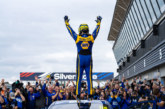
When it came to the culmination of all the team’s efforts, Jimmy was the fastest in all but one of his four qualification runs, with a best combined time of 6.6241 seconds and a maximum speed of 211.86 mph; however, despite achieving the quickest quarter mile time of 6.5990 and the higher top speed of 209.94mph, his reaction time was a fraction slower than his opponent’s, which meant he just lost out on the win in Sunday’s final – by a mere 0.0079 of a second!
Rubbing salt into the wound, although Jimmy was leading the championship as the team pulled into Santa Pod, as it was the last round of the season, it also meant he was pipped to the title. Despite the setback, with so much experience in his locker and DENSO Iridium Power spark plugs under the bonnet, he’s already raring to go for the 2026 championship and has his sights firmly set on securing his next title.